Thanks to a research partnership between Embark Veterinary and the College of Veterinary Medicine, DNA tests also provide findings that could improve dogs’ health.
The Southern Ocean – between Antarctica and other continents – will eventually release heat absorbed from the atmosphere, leading to projected long-term increases in precipitation over East Asia and the Western U.S.
Run by the Cornell Atkinson Center for Sustainability, the fund delivered payments and provided support to growers who planted cover crops and reduced tillage on nearly 15,000 acres in western and central New York.
A primary research focus for the new lab is understanding how young people develop a sense of purpose, and how it impacts their everyday experiences and contributes to their long-term development.
Pregnancy may offer some protection from developing long COVID, found a new study led by Weill Cornell Medicine, University of Rochester Medical Center, University of Utah Health and Louisiana Public Health Institute.
Nearly 500 staff, faculty, retirees and relatives gathered on campus March 29 for the annual Employee Celebration, enjoying athletic events, a community dinner and family-friendly activities.
Competition looks a little different now from when she played on the clay of Roland Garros and the grass of Wimbledon, but after 38 years of playing tennis, Anda Perianu can still win.
Students who want an immersive on-campus experience with American Sign Language can now sign up to live in the Language House for the 2025-26 academic year.
In his new book, “Humanities in the Time of AI,” professor Laurent Dubreuil argues that the arrival of AI may present an opportunity to “re-create scholarship.”
Researchers at Weill Cornell Medicine developed a more effective model for predicting how patients with muscle-invasive bladder cancer will respond to chemotherapy.
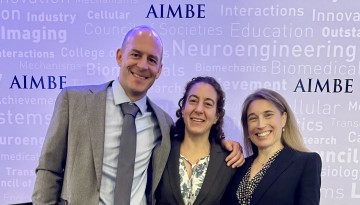
Engineering professors Ilana Brito, Iwijn De Vlaminck and Krystyn Van Vliet were inducted into the American Institute for Medical and Biological Engineering College of Fellows Class of 2025 for contributions to engineering and medicine research.
Cornell scientists launched aluminum particles, each about 20 micrometers in diameter, onto an aluminum surface at speeds of up to 1,337 meters per second – well beyond the speed of sound – and used high-speed cameras to record the impacts.