Cornell information science researchers have developed a method that can help online advertisers ensure they’re reaching their intended audience and reduce “skew” – under-delivery to certain demographic groups.
A new study from Cornell researchers has revealed an obstacle to improving charge transport in hybrid perovskites, a promising class of semiconductor materials used in energy conversion and electronic devices.
Loss of GATA6 – a transcription factor that controls which genes are turned on or off – can reprogram colorectal cancer cells into more primitive, adaptable states that can then spread to the liver and establish new tumors.
The Program for Research on Youth Development and Engagement at the Bronfenbrenner Center is helping youth educators understand how to foster a sense of purpose in the young people they serve.
The 2026 Jiang Fellows have accepted internships and will spend the summer gaining firsthand entrepreneurial experience through the Duffield College of Engineering program.
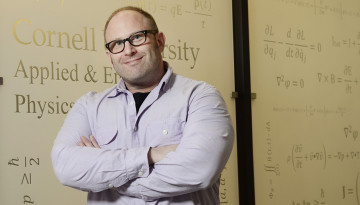
Craig J. Fennie, associate professor at the Cornell Duffield College of Engineering whose groundbreaking research opened pathways for scientists to discover and design materials, died on June 14. He was 54.