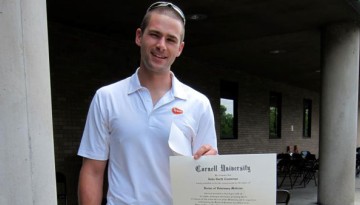
The Garth Cummings, D.V.M. ’11, and Sons Externship honors the memory and values of the alumnus, who lived a life of adventure and dedication to sound animal agriculture.
Four Cornell University Police Department officers were officially sworn in and four others received promotions at the officer commissioning and swearing-in ceremony, held Nov. 8 at Moakley House.
At COP27 meeting in Egypt, Engineering Professor Semida Silveira delivered a United Nations working group statement to accelerate global net-zero carbon emissions principles.
Cornell researchers and parent educators are identifying how the opioid crisis has ravaged New York state families and the solutions that help parents and children reunify.
For the first time, people around the world, including conservationists, can zoom in to within an 8-mile radius to see exactly where each of 586 bird species is increasing or decreasing – providing localized insights needed to restore rapidly declining bird populations and habitats.
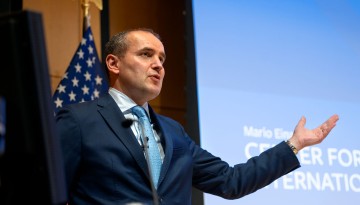
Guðni Th. Jóhannesson, president of Iceland, discussed his country’s commitment to peace, diversity and science-based climate solutions during a sold-out lecture held Nov. 10 in Klarman Hall.
Cornell researchers compared federal floodplain home buyout policies with regional programs, showing that local strategies may make these acquisitions more equitable and effective.
A social media influencer with nearly 40,000 followers on Instagram, Isaiah Scott ’25 is emerging as a young adult leader in the national birding community.
Adul Samon came to campus for a six-week Precollege program this summer to study biology and take a personal essay course. Adul was one of 12 boys who, along with their soccer coach, were trapped in a flooded underground cave in Thailand in 2018. Their dramatic rescue was recently made into the film Thirteen Lives.
The number of undergraduate veterans enrolled at Cornell has nearly quadrupled over the past five years, thanks in part to outreach by a team of student veteran peer counselors.
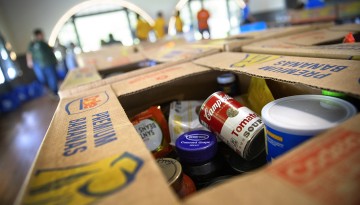
Research by Cornell and the U.S. Department of Agriculture offers the first estimates of food pantries' economic value to families, highlighting their important role in addressing food insecurity.