The annual business symposium examines climate change resilience, community revitalization, social justice and reducing the clothing industry’s large carbon footprint.
Cornell’s Institute for Food Safety is teaming with the New York State Department of Agriculture and Markets to offer the first-ever in-state FDA course to train food inspectors across the state.
Local community organizations, activists, students and researchers will meet April 19 to delve into the historical significance of the Freedom Farm Cooperative movement and spur conversations around the contemporary resurgence of food justice and sovereignty movements in rural and urban spaces.
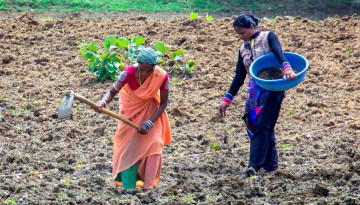
Women’s increased agricultural labor during harvest season, in addition to domestic house care, often comes at the cost of their health, according to new research from the Tata-Cornell Institute for Agriculture and Nutrition.
A first-of-its-kind report intends to guide innovators and investors toward urgent technology needs in New York’s farming and food processing industries, as identified by dozens of farmers, manufacturers, retailers and researchers.
“Our Changing Menu,” a new book from Cornell University Press, explains how our warming world affects crops and how it soon will alter your dinner plate.
The Center for Teaching Innovation (CTI) has selected doctoral students Giulia Andreoni and Vasilis Charisopoulos as recipients of the 2020-2021 Cornelia Ye Outstanding Teaching Assistant Award.
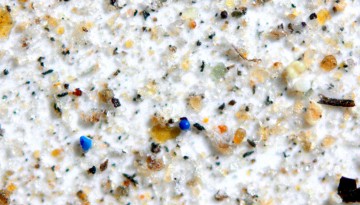
By sea or by land, microscopic shards of plastic are more ubiquitous than science had known, according to a new study led by researchers at Cornell and Utah State University.
Five doctoral candidates were inducted into the Cornell chapter of the Bouchet Graduate Honor Society, which recognizes outstanding scholarly achievement and promotes diversity and excellence in doctoral education.