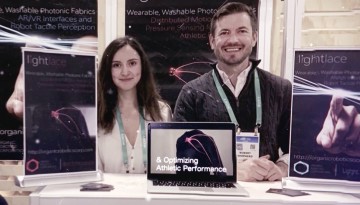
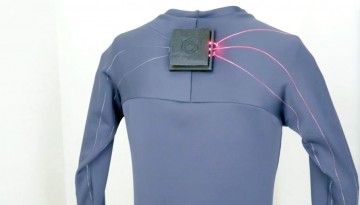
Cornell Engineering startup Organic Robotics Corporation and its stretchable sensing technology, Light Lace, topped a field of four finalists to win the sixth annual NFL 1st & Future competition, sponsored by the National Football League.
ILR Assistant Professor Courtney McCluney co-authored new research exploring the ways in which white gaze permeates organizations and is experienced by Black women in the workplace.
Cornell leadership said in a statement that, beginning Feb. 4, faculty, staff and students will have the option of agreeing to allow COVID-19 testing data and samples to be used by Cornell researchers.
In coastal regions of the Philippines, ties to the community motivate most people to stay in their homes despite the risks of frequent, severe floods, Cornell research finds.
In the Three Minute Thesis competition, graduate students compete for monetary prizes by distilling their thesis or dissertation research into a three-minute presentation in front of a non-technical audience.
Dimensional Energy – a McGovern Center startup that converts carbon dioxide via sunshine into eco-friendly aviation fuel – is a finalist for the $20 million Carbon X Prize.
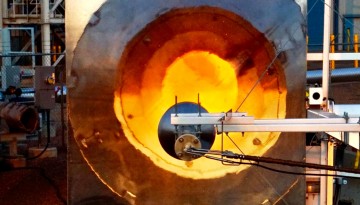
Cornell wind energy scientists have released a new global wind atlas – a digital compendium filled with documented extreme wind speeds – to improve turbine placement.
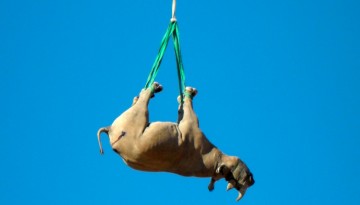
When moving endangered rhinoceroses in an effort to save the species, hanging them upside down by their feet is the safest way to go, new research from College of Veterinary Medicine has found.
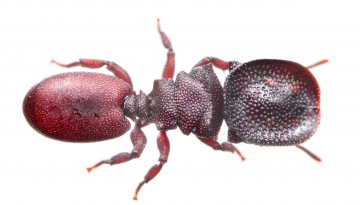
Gut bacteria in a species of herbivorous ant play a major role in processing nutrients that allow the ants to build tough exoskeletons, an international team of researchers has found.
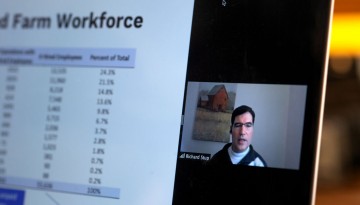
Richard Stup, agricultural workforce specialist, analyzed the key issues facing New York state farmers this year during Dyson's 2021 Agricultural and Food Business Outlook Conference, held virtually Jan. 25.
The Board of Directors of the Council of Graduate Schools (CGS) has announced that Dr. Jan Allen, associate dean of academic and student affairs of the Graduate School at Cornell University, is the 2020 winner of the Assistant and Associate Deans Leadership Award.
Organic Robotics Corporation, a Cornell engineering startup founded in 2018, is in the finals the sixth annual NFL 1st & Future competition, airing Feb. 2 at 8 p.m. EST on the NFL Network.