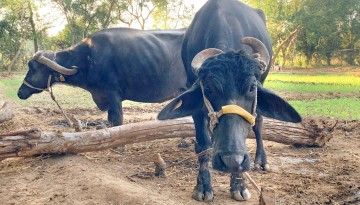
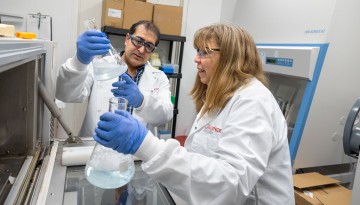
Cornell will teach small farmers in India – the world’s largest dairy producer – how to produce milk more efficiently while limiting greenhouse gas emissions.
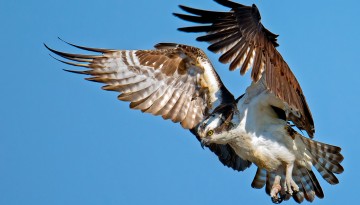
A new computer model using machine learning to predict migratory bird movement could open the door to new insights on migration timing, stopover sites, bird response to climate change, light pollution and more.
Native speakers often dominate the discussion in multilingual online meetings, but adding an automated participant that periodically interrupts the conversation can help nonnative speakers get a word in edgewise, according to new research at Cornell.
Twelve Cornell and Weill Cornell Medicine faculty members – six of whom are also Cornell alumni – have been elected fellows of the American Association for the Advancement of Science, the world’s largest general scientific society.
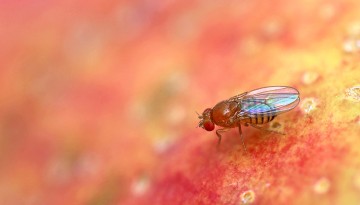
A seminal fluid protein transferred from male to female fruit flies during mating changes the expression of genes related to the fly’s circadian clock, Cornell research has found.
Arthur Allen Muka, M.S. ’52, Ph.D. ’54, whose work in applied economic entomology supported growers in New York and around the globe, died Dec. 7, 2022, in Ithaca.
Forte Protein – a new Cornell startup that grows commercial animal proteins inside agricultural plants – has joined the university’s Center for Life Science Ventures business incubator.
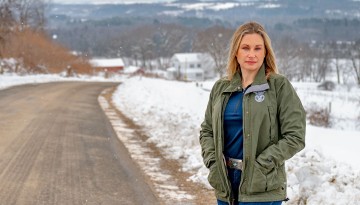
Cornell professor Robert Howarth advised New York state senators last week to downsize the state’s natural gas pipeline system and to repeal laws that easily connect gas to new homes.