When Twitter users tweet a false rumor, they are more than twice as likely to accept correction if it comes from a mutual follower – someone they follow who also follows them, says social media expert Drew Margolin.
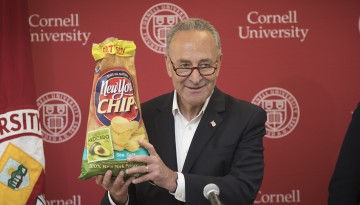
U.S. Sen. Charles E. Schumer announced a commitment of $400,000 to the Federal Golden Nematode Laboratory at Cornell Sept. 1. The lab is the "front line of defense" against pests that pose a threat to New York’s $65 million potato industry.
At 107 years old, Olaf Larson is Cornell’s oldest living faculty member. When asked to explain his longevity, the professor emeritus of rural sociology quipped: “That’s a secret.” And then he laughed.
“A Conversation With John Cleese,” hosted by the Office of the Provost and the Cornell University Program Board, is set for Monday, Sept. 11, at 7 p.m. in Bailey Hall.
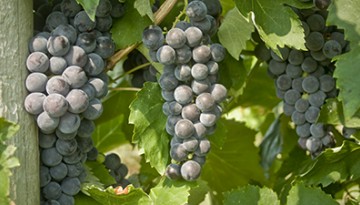
A Cornell-led project that uses genomic technology to create varieties that are more flavorful and sustainable has been renewed with a $6.5M USDA grant.
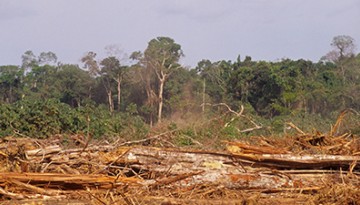
A new Cornell-led study shows that deforestation and subsequent use of lands for agriculture or pasture, especially in tropical regions, contribute more to climate change than previously thought.
An existing drug may one day protect premenopausal women against life-altering infertility that commonly follows cancer treatments, according to a new study.