Assistant Professor of Music Catherine M. Appert looks at Senegalese hip-hop, its mythology and ethnography in her book “In Hip Hop Time: Music, Memory, and Social Change in Urban Senegal.”
Cornell University Library offered a workshop for graduate students and postdocs in engineering, math and physical sciences on the resources that can jump-start their careers.
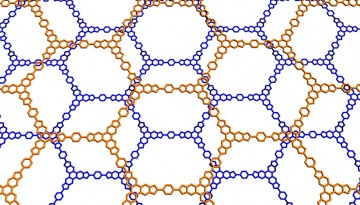
The strength of the attraction between molecules in two-dimensional materials, known as van der Waals forces, is dependent on the size of the empty spaces in the material, researchers have found.
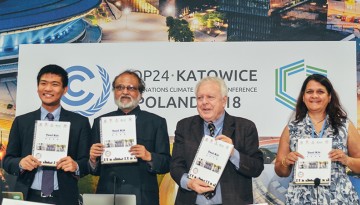
In a whirlwind of seminars, plenary sessions and corridor conversations, 17 Cornell students and six faculty attended COP24 in Katowice, Poland in December.
A new edition of Jean Toomer’s “Cane,” edited by Cornell professor George Hutchinson, revives the 1923 novel of the African-American experience as “a book for our times.”
Researchers from the Cornell-led Center for Bright Beams are trying to develop new ways to make the next generation of superconducting particle accelerators more efficient.
On secondhand marketplaces like eBay, people trust online sellers who post their own high-quality photos of items for sale more than they trust those who use stock images or poor-quality photos, a Cornell Tech study has found.