Jane-Marie Law, associate professor in the Department of Asian Studies, led 14 students on a 12-day trip to Japan in June after a semester-long class on Zen Buddhism.
An endowment bequeathed by Kenneth A.R. Kennedy, professor of physical anthropology at Cornell for 41 years, will fund a lecture series and visiting professorship in human evolutionary biology.
Mary Beth Norton, the Mary Donlon Alger Professor of American History, has been elected president of the American Historical Association. Her one-year term as president will begin in January 2018.
In June about 180 new Cornell students arrived on campus for the Prefreshman Summer Program, which gives them the opportunity to prepare for the challenges of their first year of college.
Immobilizing negatively charged ions in the polymer-like separators of rechargeable lithium batteries is shown to result in stable electrodeposition, even at relatively high current densities.
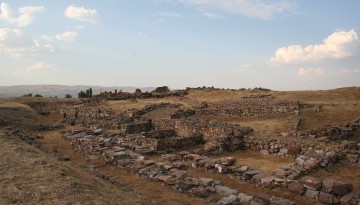
Dendrochronology research by professor Sturt Manning has established a secure timeline for the archaeological and historical chronology of Mesopotamia in the second millennium B.C.
Cornell’s global reach expands with the inaugural session of the East China Normal University (ECNU)/Cornell University Summer School in Theory (ECSST), July 18-22 in Shanghai.