A new protocol can detect and remove fake data created by bots and humans attempting to enroll in online research studies, in order to prevent biased results and unwarranted payments to bad actors – the first such protocol specifically designed for data collected in rural communities.
From introducing reusable takeout containers to Cornell’s dining facilities to reducing laboratory dependence on fossil fuels, the President’s Awards for Employee Excellence celebrated these and other achievements Nov. 19 in Barton Hall.
The Cornell University College of Veterinary Medicine celebrated the grand reopening of the Cornell Equine Park Wednesday, Nov. 13. The event comes after two years of construction and remodeling of the park on Bluegrass Lane, just a mile east of campus.
Unlike birds, the evolution of bats’ wings and legs is tightly coupled, which may have prevented them from filling as many ecological niches as birds, researchers from the College of Veterinary Medicine have found.
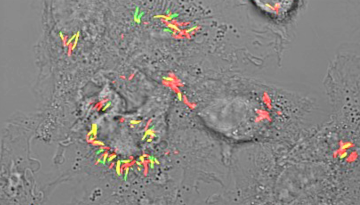
Researchers in the College of Veterinary Medicine and colleagues have discovered that a protein complex that helps fight cancer cells also slows the growth of tuberculosis – a finding that could mean better treatments for both diseases.
Maddie’s Fund®has awarded the Maddie’s® Shelter Medicine Program (MSMP) at Cornell University a new $4.6 million grant to sustain and grow its work over the next five years.
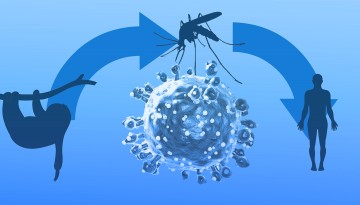
For the first time, scientists have tracked the dispersion of the Oropouche virus in the Brazilian Amazon region, an important first step to control future outbreaks of a disease with more than 100,000 reported cases since the 1960s.