As a Kluge Chair, Jackson is invited to conduct research using the collections at the Library of Congress and to interact with congressional members and staff.
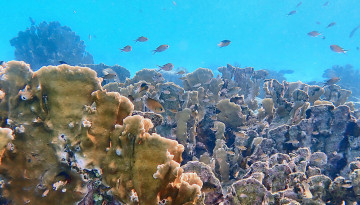
A doctoral student and a team of Cornell researchers and colleagues created WildFin, a data set composed of nine hours of video that they labeled frame-by-frame with fish behaviors.
Cornell researchers’ analysis of 1.5 million petitions on Change.org showed that AI writing assistance altered the wording of petitions, increasing their homogeneity and length, but did not improve petition outcomes.
After a year of engaging with university stakeholders and at a critical moment for higher education in the United States, a faculty-led committee has offered its vision for fortifying Cornell’s long-term future in the face of unprecedented challenges.
Two new initiatives involving artificial intelligence in Cornell classrooms will encourage experimental and balanced use, while exploring ways to deploy AI that align with the teaching needs and strategies of individual academic fields.
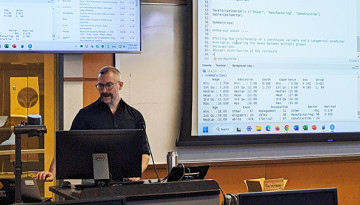
CSCU will host “Ask the Statisticians: AI in Scientific Research,” a free virtual session to discuss how Cornell researchers are integrating AI into their statistical workflows.
A $1.49 million award from the John Templeton Foundation will enable Cornell researchers Gordon Pennycook and David Rand ’04 to explore whether artificial intelligence can be used to understand and increase open-mindedness.
New event asks the community to decrease technology use, increase face-to-face interaction and consider that every AI chat, doomscroll and text message has a water, energy and carbon footprint.
Cornell and global leaders will come together at Climate Week NYC Sept. 20-27 to discuss some of the world’s most pressing sustainability challenges, including harnessing AI’s power while mitigating its negative impacts.