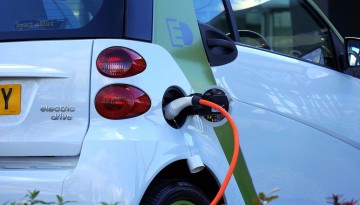
A new study finds that the global shift to electric vehicles could significantly reduce energy use and carbon emissions, but only if governments act aggressively to lower costs and align policies across regions.
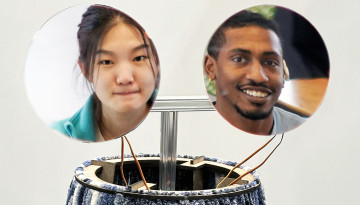
Cornell researchers developed a dual mirror-equipped robot, MirrorBot, that spurred conversations, playful exchanges and other interactions between strangers sparked by initial eye contact made in the mirrors.
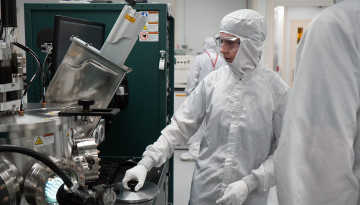
A $9.5 million investment in the Cornell NanoScale Science and Technology Facility from Duffield Engineering will position the facility for its next era of leadership in semiconductor research, education and workforce training.
An autonomous artificial intelligence platform developed at Cornell streamlines materials research by quickly identifying key features in a microscopy image.
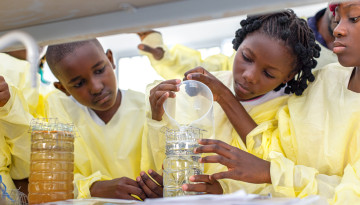
Doctoral student Cátia Dombaxe is bringing badly needed practical science education to impoverished areas of Angola through the STEAMpact Foundation, a nonprofit she founded in 2024.
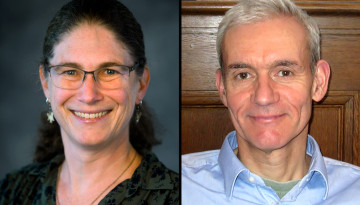
Engineering professor Lara Estroff and plant science professor Klaas van Wijk have been elected fellows of the American Association for the Advancement of Science, the world’s largest general scientific society.
An additional $6 million in funding over the next four years will bolster the Support for Promising Research Opportunities and Unconventional Teams program, designed to encourage emerging collaborations at the intersection of research fields.