Cornell researchers have found a way to build a zinc-anode battery that not only has a high energy density, but is low cost and stable, and has a life cycle that can be significantly prolonged.
Selecting the most effective molecules for drug delivery can be a trial-and-error process, but Cornell engineers have developed a new technique that provides some precision.
A new artificial intelligence tool developed by Cornell researchers scans millions of publicly available photos to effectively identify fashion trends around the world, as well as traditions and events with signature styles.
The third annual Cornell Digital Agriculture workshop, Oct. 30 in the Statler Hotel, will bring together stakeholders across disciplines to solve the biggest problems in agriculture and food systems.
Cornell and Northwestern engineers, and a federal economist, have created an energy model that aims to remove carbon power from the U.S. electric grid – replacing it with financially feasible green energy.
Research projects investigating the sounds of soil bring the fields of soil science, art, bioacoustics, entomology and other disciplines together, and blend creative practice with scientific inquiry.
A universal influenza vaccine developed with the potential to be longer lasting and more effective than commercially available vaccines is destined for human clinical trials, thanks to a $17.9 million grant from the National Institute of Allergy and Infectious Diseases.
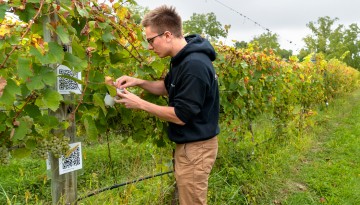
A Cornell doctoral student is deploying new satellite technology that may be used for space research in the future and help New York farmers make more informed decisions today about growing crops and caring for animals.
Cornell researchers have put a new spin on measuring and controlling spins in nickel oxide, with an eye toward improving electronic devices’ speed and memory capacity.