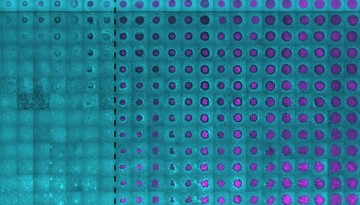
Cornell researchers developed a multimodal platform to image microbe-semiconductor biohybrids with single-cell resolution, to better understand how they can be optimized for more efficient energy conversion.
As concerns about climate change intensify, researchers are exploring the potential for large-scale human intervention in the Earth’s climate system, a strategy sometimes referred to as geoengineering. Two leading researchers in the area discuss how their research in sunlight reflection methods fits into the bigger picture of potential climate solutions.
An interdisciplinary research team received a five-year, $2 million grant from the National Science Foundation to develop a new generation of biosynthetic lubricants that have the potential to treat arthritis and reduce the painful friction of artificial joints.
In a fast-fashion, throw-clothes-away world, textile expert Juan Hinestroza (Human Ecology) and a group of scientists have new ways to recycle wasted polyester into new useful products.
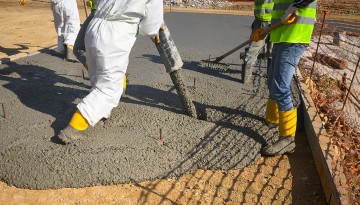
Greeshma Gadikota, associate professor of engineering, has gathered a team to help capture carbon dioxide in the concrete-making process as they aim to create low-carbon construction materials from it.
Unused solar, wind and hydroelectric power in the U.S. could support the exponential growth of transactions involving non-fungible tokens, Cornell Engineering researchers have found.
With artificial intelligence poised to assist in profound scientific discoveries that will change the world, Cornell is leading a new $11.3 million center focused on human-AI collaboration that uses mathematics as a common language.
Cornell researchers have revealed the intricate nanotextures in thin-film materials, offering scientists a new, streamlined approach to analyzing potential candidates for quantum computing and microelectronics, among other applications.
How Earth’s inner core formed and evolved over time remains a mystery, one that a team of researchers is seeking to plumb with the help of earthquakes and a global nuclear monitoring system.