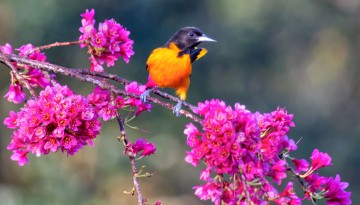
A group of scientists has released the first comprehensive list of birds that haven’t been documented in more than a decade, with the help of Macaulay Library at the Cornell Lab of Ornithology.
The relationship between mother and child offers clues to the mystery of why humans live longer lives than expected for their size – and sheds new light on what it means to be human.
A study identifies microbes that potentially play important roles in breaking down harmful PFAS chemicals and points to functional genes that may be involved.
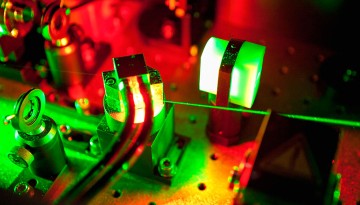
An interdisciplinary Cornell research team has developed a new surgical technique that blocks the spread of focal epileptic seizures in the brain by making precise incisions with femtosecond laser pulses.
An anonymous donor has made three gifts to the Department of Global Development to honor the legacy of the late Daniel G. Sisler, Ph.D. ’62: an engaged learning fund that will support faculty-led study trips, a new endowed professorship and a student hub in Mann Library.
Food Science Professor Julie Goddard’s research team has engineered unique enzymes to break down microplastics in sewage and wastewater, a major route of microplastic pollution into the environment.
The Center for Research on Programmable Plant Systems is welcomes the 2024 cohort of the National Science Foundation-funded Research Experiences for Undergraduates program.