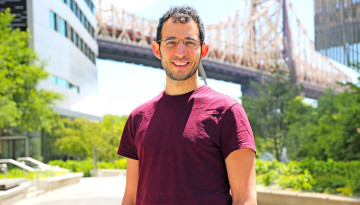
Makora, a startup founded by assistant professor Mohamed Abdelfattah, has received a $1.75 million award from the National Science Foundation-supported STRIDE Ventures AI Efficiency Challenge.
An experimental opioid painkiller designed to be reversibly switched on and off with different light frequencies may eliminate the dangerous side effects of current opioids, according to a study co-led by Weill Cornell medicine researchers.
Parents of children with mental health problems may experience stigma when the ideals that matter most to being considered a “good parent” are perceived as not being met, according to research co-led by Weill Cornell Medicine.
A new book, “Your Immune System,” written by Gary Koretzky ’78, vice provost for research and a professor emeritus of medicine at Weill Cornell Medicine, aims to demystify immunology for laypeople.
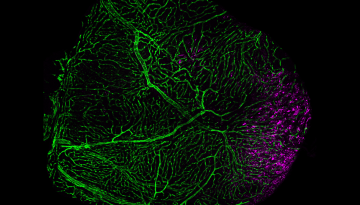
Researchers at Weill Cornell Medicine, working with zebrafish, have discovered a new cell type that may help regulate blood vessel growth in the heart during development and in response to injury.
Surgery to remove lymph nodes in the neck may interfere with cerebrospinal fluid (CSF) drainage from the brain, contributing to cognitive impairment, according to new multicenter research led by Weill Cornell Medicine scientists.
Cornell researchers’ analysis of 1.5 million petitions on Change.org showed that AI writing assistance altered the wording of petitions, increasing their homogeneity and length, but did not improve petition outcomes.
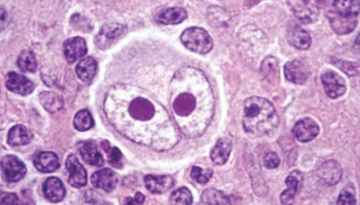
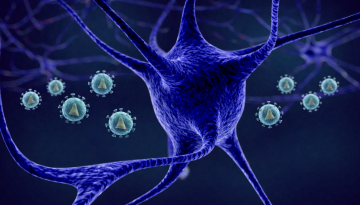
The discovery research center could uncover molecular markers that enable new diagnostics and lead to potential therapies for people living with neurological complications related to HIV.
Financial strategies can advance sustainability goals, but only if environmental trade-offs can be measured and incorporated into decisions, a panel of experts said at a Climate Week NYC 2026 event co-hosted by the SC Johnson College and Cornell Atkinson.