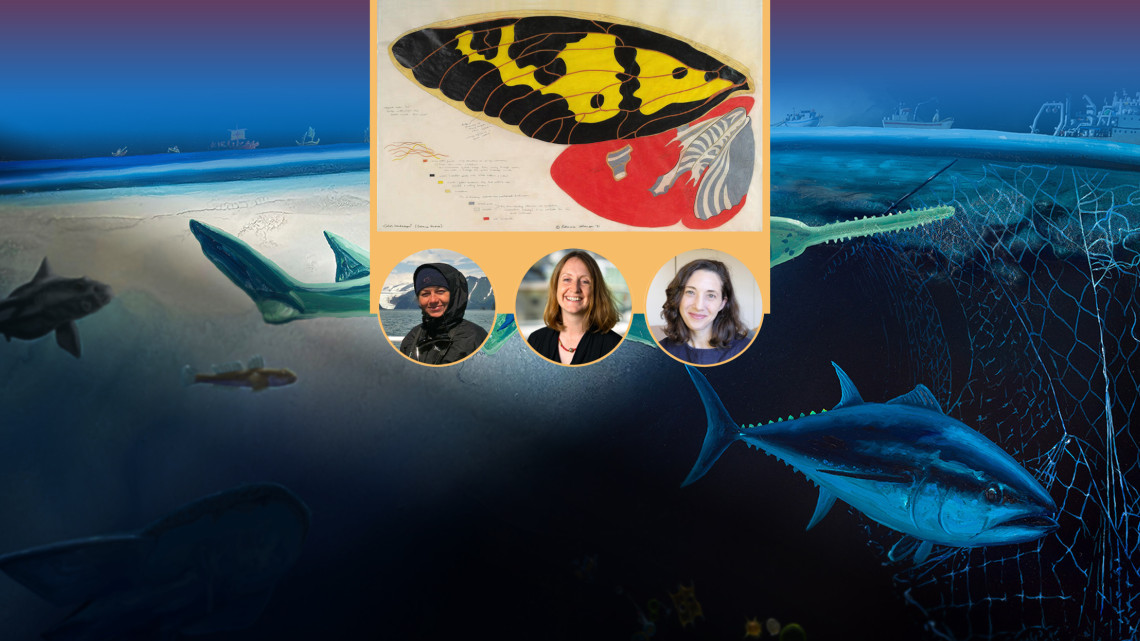
The "Teaching About Climate Change: Art, Action, and Reflection" event on Wed. Jan. 28, a collaboration between the Center for Teaching Innovation and the Herbert F. Johnson Museum of Art, will include a faculty panel, workshop, and tour of “Naples: Course of Empire,” the new Alexis Rockman exhibit that opens Jan. 20 at the Johnson Museum.
News directly from Cornell's colleges and centers
Faculty event to highlight how teaching about climate change can move beyond discourse and despair
By Carolyn Keller
On Jan. 28, the nexus of art, sustainability, reflection and thoughtful action will take center stage in “Teaching About Climate Change: Art, Action and Reflection,” a Cornell faculty panel, teaching workshop and museum exhibit tour exploring how instructors can engage the humanities, climate change and community in their teaching.
Hosted by the Center for Teaching Innovation and the Herbert F. Johnson Museum of Art, the event will take place from 1-3:30 p.m. in the museum’s Robinson Lecture Hall, Level 2L. It is free and open to faculty and graduate students at Cornell.
Cornell faculty panelists include Anna Margaret Davidson, lecturer and senior research associate in the Natural Resources and the Environment Section in the Ashley School of Global Development and the Environment within the College of Agriculture and Life Sciences. A scientist and an artist whose work engages climate breakdown, ecological memory, and environmental justice and destruction, Davidson will explore teaching ecological arts courses to undergraduate students in the context of a dramatically changing planet.
Caroline Levine, the David and Kathleen Ryan Professor of Humanities in the Department of Literatures in English in the College of Arts & Sciences (A&S) and the author of The Activist Humanist: Form and Method in the Climate Crisis, will present on the question of whether awareness leads to climate action, and how the arts can play a role in spurring people to take meaningful action.
Kelly Presutti, assistant professor in the Department of History of Art and Visual Studies (A&S), will question art’s purpose in the context of climate change. Presutti’s first book, Land into Landscape: Art, Environment, and the Making of Modern France, examines how state power, local populations and the environment are negotiated and contested through four types of landscapes: forests, mountains, wetlands, and coasts.
The panelists’ presentations reflect their longstanding research and teaching experiences related to climate change.
“The interdisciplinary approaches to teaching that our panelists will highlight is worth noting because of their thoughtful and creative engagement with humanities, art, science, technology, and people,” said Melina Ivanchikova, associate director at CTI and event co-organizer. “They work across different ways of knowing, creating opportunities for experience and reflection, community collaborations, and innovative technologies to help learn, spark imagination, make sense of experience, and inspire others.”
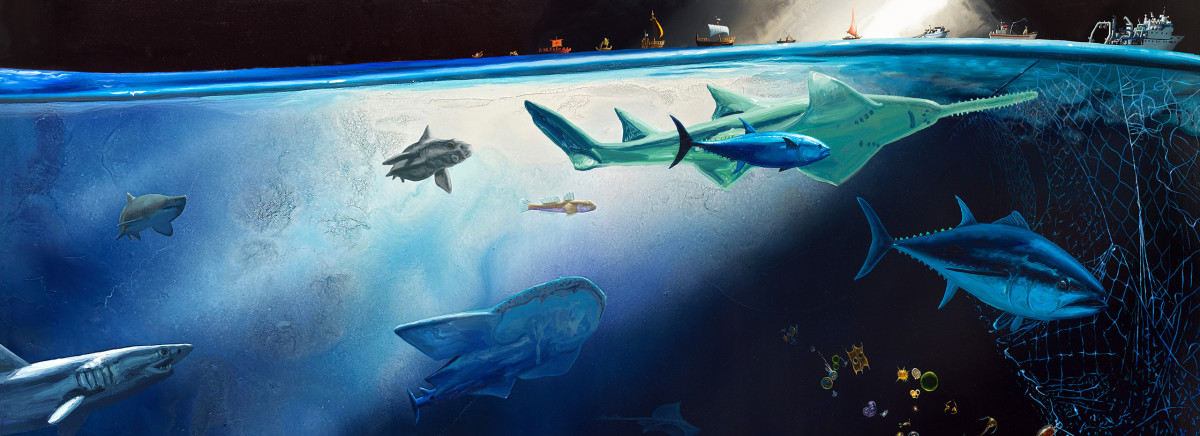
A tour of “Naples: Course of Empire,” the new Alexis Rockman exhibit that opens at the Johnson Museum of Art on Jan. 20, is part of the "Teaching About Climate Change: Art, Action, and Reflection" event, to be held Jan. 28.
Following the presentations, “Teaching About Climate Change” will shift its focus to small group conversation and a tour of “Naples: Course of Empire,” the new Alexis Rockman exhibit that opens at the Johnson Museum of Art on Jan. 20.
Rockman’s exhibit uses metaphor, emotion and a historical painting style to imagine speculative futures and create a sense of urgency about the climate crisis, in the hopes that it will invite viewers to consider the ways in which our environment is shared in the past, present and in possible futures.
Ivanchikova is co-organizing “Teaching About Climate Change” with Jakub Koguciuk, the Lynch Postdoctoral Associate for Curricular Engagement at the Johnson Museum. The event is purposely designed to build community and create opportunities for participants to connect with each other and share ideas about teaching.
“Our overarching goal with these programs is to create space for dialogue and learning across disciplines about various approaches and challenges to teaching about climate change, thinking there may be a community of faculty, instructors and graduate students who might benefit from thinking together about teaching about climate change with the added resource of CTI’s support,” Ivanchikova said.
Beyond inspiring creativity and new teaching approaches to a difficult topic, the collaborators hope to provide an opportunity for faculty to discover how teaching museums like the Johnson can provide engaging opportunities for active student learning across disciplines, whether those students are touring an exhibit or working with a collection.
This is the fourth CTI event and campus collaboration focused on cross-disciplinary approaches to teaching about climate change. Past collaborations with the Einhorn Center for Community Engagement include “Teaching About Climate Change,” a similar panel and workshop, and “Teaching Climate Change: Preparing Students for Their Future,” a five-week summer learning community held in May-June 2025.
CTI was also a co-sponsor, with the Sustainable Cornell Council’s Climate Change Curriculum Working Group, Einhorn Center, and Atkinson Center for Sustainability of a Topical Lunch series event, “Climate Change: Integration of Research and Teaching” in 2024.
Upcoming events for Spring 2026 include another topical lunch in March, date to be determined, at the Atkinson Center for Sustainability, co-hosted with the Climate Change minor. The “Teaching Climate Change: Preparing Students for Their Future” learning community will also return in late May 2026.
Media Contact
Get Cornell news delivered right to your inbox.
Subscribe