News directly from Cornell's colleges and centers
Hackathon winners combat ear infections, parasites and animal overpopulation
By Kathy Hovis
Products to fight ear infections in dogs, a parasite in cattle and animal population control challenges won top honors at the Feb. 20-22 Animal Health Hackathon at the College of Veterinary Medicine.
The hackathon included 116 students with diverse majors and interests who made up 25 teams that worked throughout the weekend to develop business ideas related to animal health. Four students from the College of Veterinary Medicine at Tuskegee University in Alabama also traveled to Ithaca for the event.

Mentors works with a team during the 2026 Animal Health Hackathon.
“This is a chance for students to meet other students from all over campus and that integration and collaboration allows them to be more open to new ideas and opinions,” said Jorge Colon ’92 DVM ‘95, director of the Center for Veterinary Business and Entrepreneurship at the veterinary college and organizer of the hackathon, along with Ami Stuart from Entrepreneurship at Cornell. “The students also learn things about themselves. They realize they can do things they didn’t know they could do, that there are things they shouldn’t be afraid to try. These are life-changing skills.”
The three winning teams were:
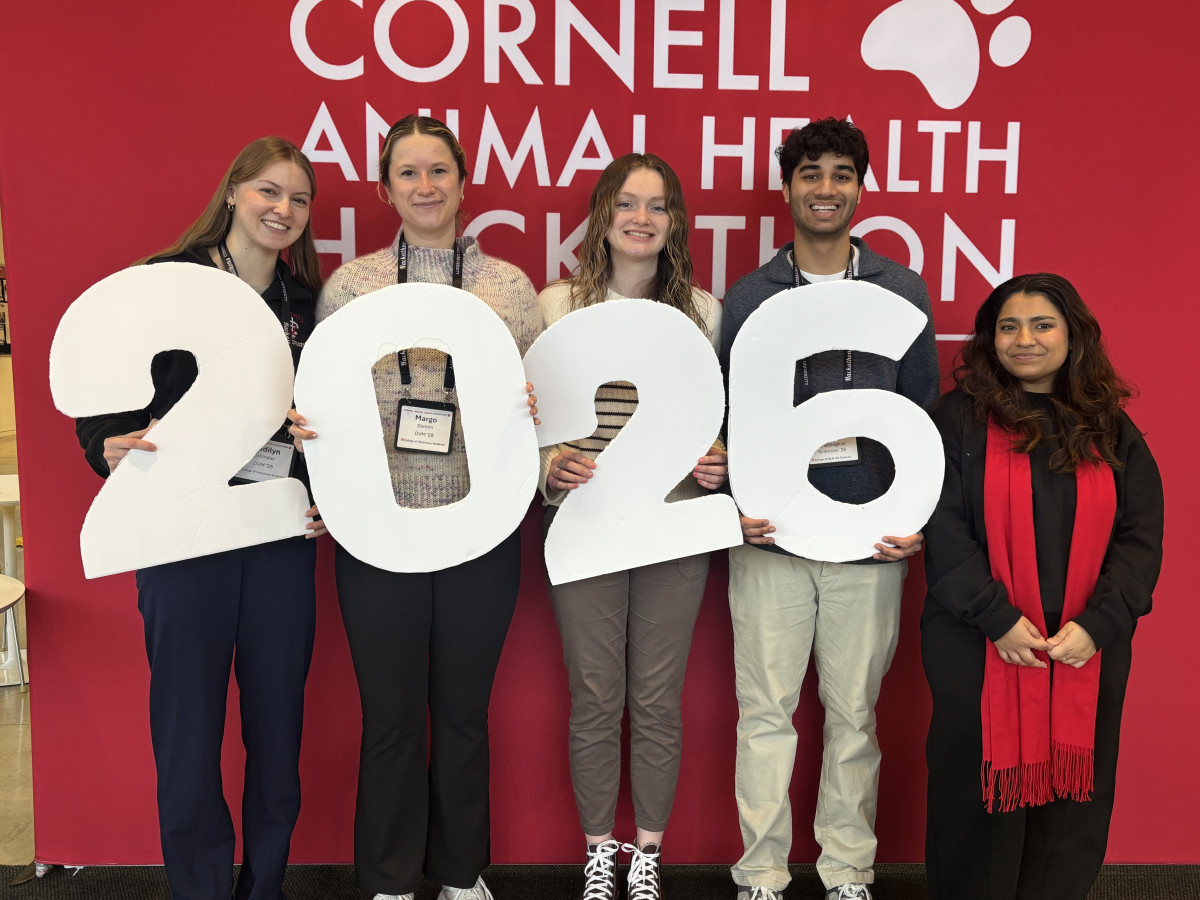
The Otitis Fightus team
Most financial and market potential: Otitis Fightus, whose product OtiVance is a method to help identify specific strains of bacteria or yeast causing ear infections, without an ear cytology or lab culture. Team members were: Krista Greening DVM ‘29, Madilyn Schindler DVM ‘29, Margo Ganton DVM ‘29, Siraj Gandhi ’28 (CALS) and Tanisha John MEng/MBA ’26.
“Ear infections are the third most common reason why dogs come to the vet,” Gandhi said. “We really valued team culture and had a lot of respect on our team and a lot of trust in each other,” Ganton said, with John adding that she contributed her expertise on financials and business to the team “and I’d never heard of cytology before this weekend, but now it’s something I can never forget.”
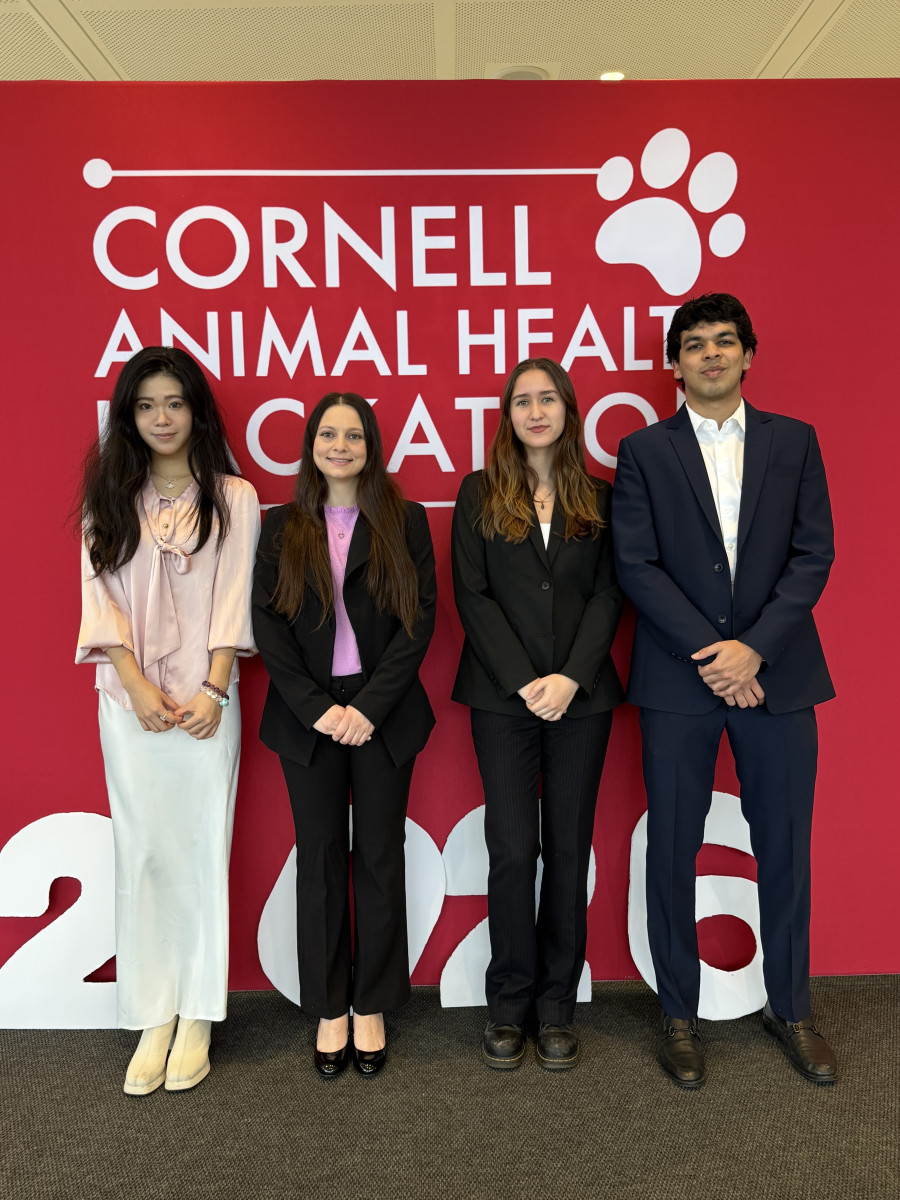
The Big Red Dawgs team
Most novel and innovative animal health solution: Big Red Dawgs, an injectable quick and low-cost pet sterilization method. Team members were: Aryan Agarwal ’26 (CALS), Athena Huo MEng ‘26, Sofia Mykytenko ’28 (CALS) and Vianna Bassani DVM ’27.
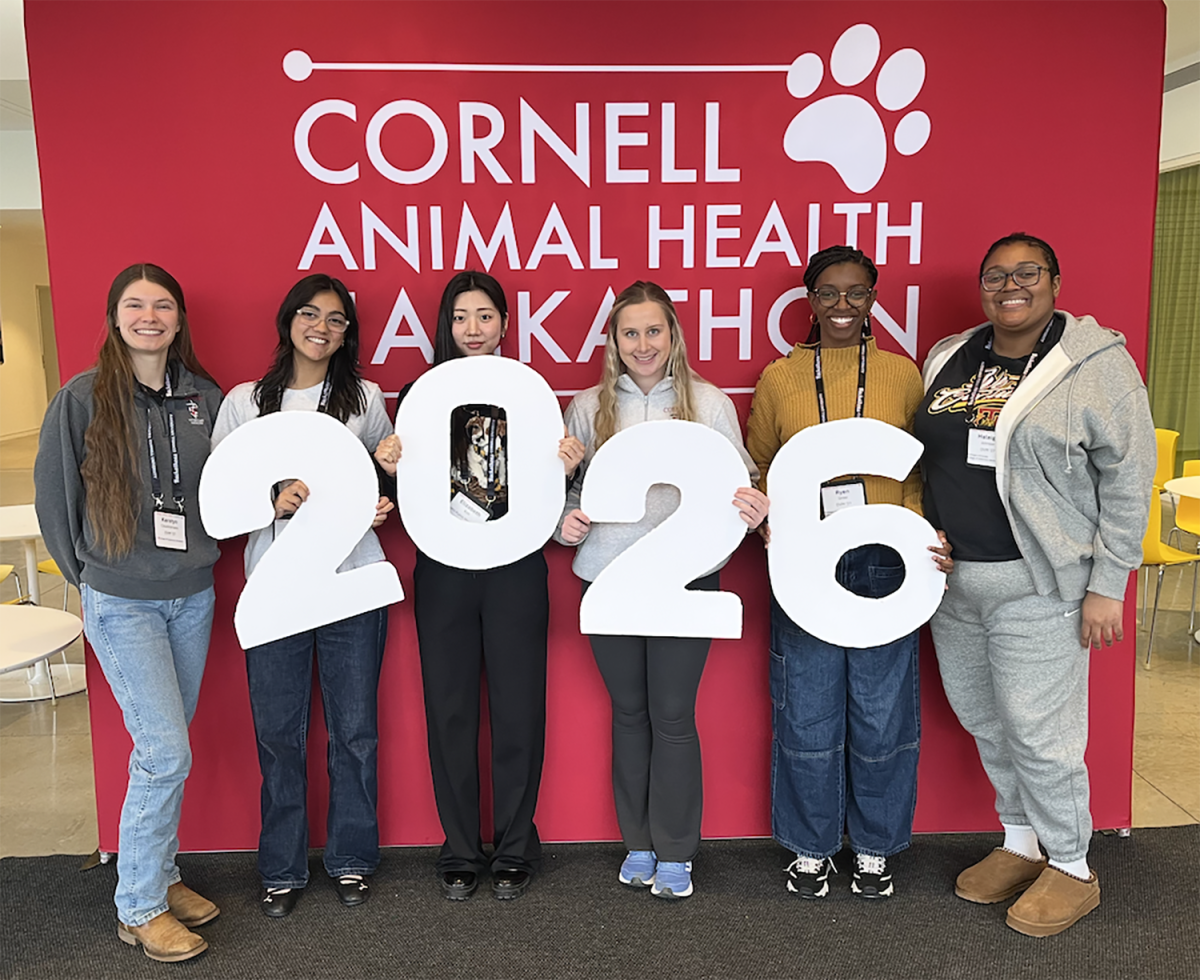
The FantasTRICH Six team
Most impactful and relevant animal health solution: The FantasTRICH Six, whose product is a quick vet-administered diagnostic test for bovine tritrichomonas, a parasite that can cause abortions, infertility and significantly reduced pregnancy rates. Team members were: Elizabeth Kim MPH ‘27, Kerstyn Countrymann DVM ’27, Maggie Kowalewski DVM ’28, Sofia Kulasooriya ’26 (HOTEL), Ryen Greer DVM ‘27 and Haleigh Johnson DVM ’27.
“There’s a lot of things we worry about without getting rapid results for tritrichomonas because it’s a rapid disease and very costly,”’ said Countrymann, a vet student who owns a cattle ranch in central Nevada. “There’s a specific antigen that tritrichomonas expresses, so I thought of a SNAP test for that.”
“I was able to help with the business side,” Kulasooriya said, “and it was really cool to work on something so scientific.”
“I am trying to lean more toward large animals because there’s a need for large animal veterinarians,” said Greer, and Johnson added that she’s interested in animal reproductive issues and had experience with SNAP tests for giardia in dogs.
Greer, Haleigh and two other Tuskegee students came for the weekend as part of a “sister program” initiative spearheaded by Cornell Vet student Jeremiah Pouncy and Johnson, who were 2025 presidents of the Student American Veterinary Medical Association (SAVMA). Four Cornell students will travel to Tuskegee in March for a symposium.
Throughout the weekend, 37 mentors circulated throughout the hackathon, offering scientific, technical and business advice and ideas to the student teams. Mentors included alumni, sponsors and faculty.
“When I think of a hackathon, I think of innovation, creativity, ideating and freeform freedom to put things out there for consideration and then hone them down to see if it could be a solution for a problem,” said Andrew Eschner ’87, DVM ’90, northeast regional director for Boehringer-Ingelheim Animal Health, one of the mentors. “When I come to one of these, it reminds me that diversity matters. You can be comfortable staying in your own group, but when you have people from different backgrounds, different voices, it may not feel comfortable right away, but the downstream benefits of diversity of thought are huge.”
Mentor Paul Amerling, a veterinarian consultant and past owner and operator of the Miller Clark Animal Hospital in Mamaroneck, N.Y., came to mentor at the event because of a love of working with young veterinarians.
“One of the large concerns we’re facing is efficiency within our practices,” he said. “We still do some things the old way, but now everything is AI. I have an AI recordkeeping app and haven’t written a record in years.”
The problems in animal care, he said, haven’t changed, “but the innovative ways we’re trying to manage them are wonderful.”
Media Contact
Get Cornell news delivered right to your inbox.
Subscribe