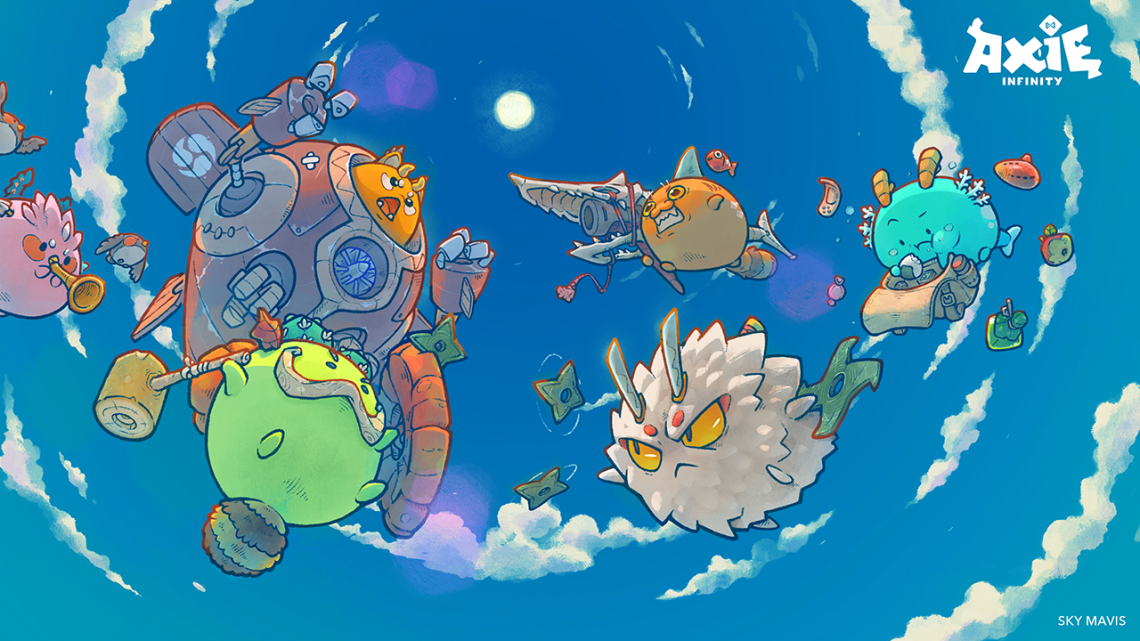
To play Axie Infinity, users purchase NFTs called “axies,” which are cute digital creatures inspired by axolotls. Players can then breed and trade their axies and enter them into fights, which earns them in-game tokens that can be periodically cashed out.
News directly from Cornell's colleges and centers
What the crash of a play-to-earn game reveals about the future of Web3
By Patricia Waldron
At the height of the COVID-19 pandemic, players flocked to Axie Infinity, a blockchain-based video game where users received cryptocurrency tokens for their time spent playing. In 2022, when the broader crypto market crashed and a massive hack erased players' earnings, most users fled. A new study by Cornell researchers investigated why some players stuck around.
By combing through social media posts on the Axie Infinity subreddit and the blogging platform Medium, Jordan Ali, a doctoral student in the field of information science, worked with Gili Vidan, assistant professor of information science in the Cornell Ann S. Bowers College of Computing and Information Science, to document the rise and fall of Axie Infinity. They found that most players weren't purely victims of the game, but participants who strategized to overcome challenges and protect their investment.
“Axie Infinity was one of the most, if not the most popular NFT [non-fungible token] play-to-earn video games that came out around the time of the pandemic," said Ali. "It's still in operation today, albeit in a far different form.”
Their study, "Playing, Earning, Crashing, and Grinding: Axie Infinity and Growth Crises in the Web3 Economy," published July 21 in the journal Big Data & Society.
Many scholars have criticized Axie Infinity as a Ponzi scheme because the game requires new players to grow the market for its tokens. But the developer, Sky Mavis, had an additional goal of advancing Web3 – a vision for the next iteration of the internet, where blockchain technology enables users to control their own data and assets in a decentralized, community-run system. Advocates of Web3 see it as a response to the current version of the internet, Web2.0, where users are primarily content creators for platforms owned and controlled by big tech companies.
Read the full story on the Cornell Bowers website.
Media Contact
Get Cornell news delivered right to your inbox.
Subscribe