NYC residents agree: heat pumps improve comfort
By Caitlin Hayes, Cornell Chronicle
Initially, the residents of a five-story New York City apartment building feared the conversion from their oil-based heating system to electric heat pumps would mean less warmth in the winter.
But now, the residents report that they prefer the heat pumps in both cold and warm weather, in terms of comfort and the ability to control the climate inside their apartments.
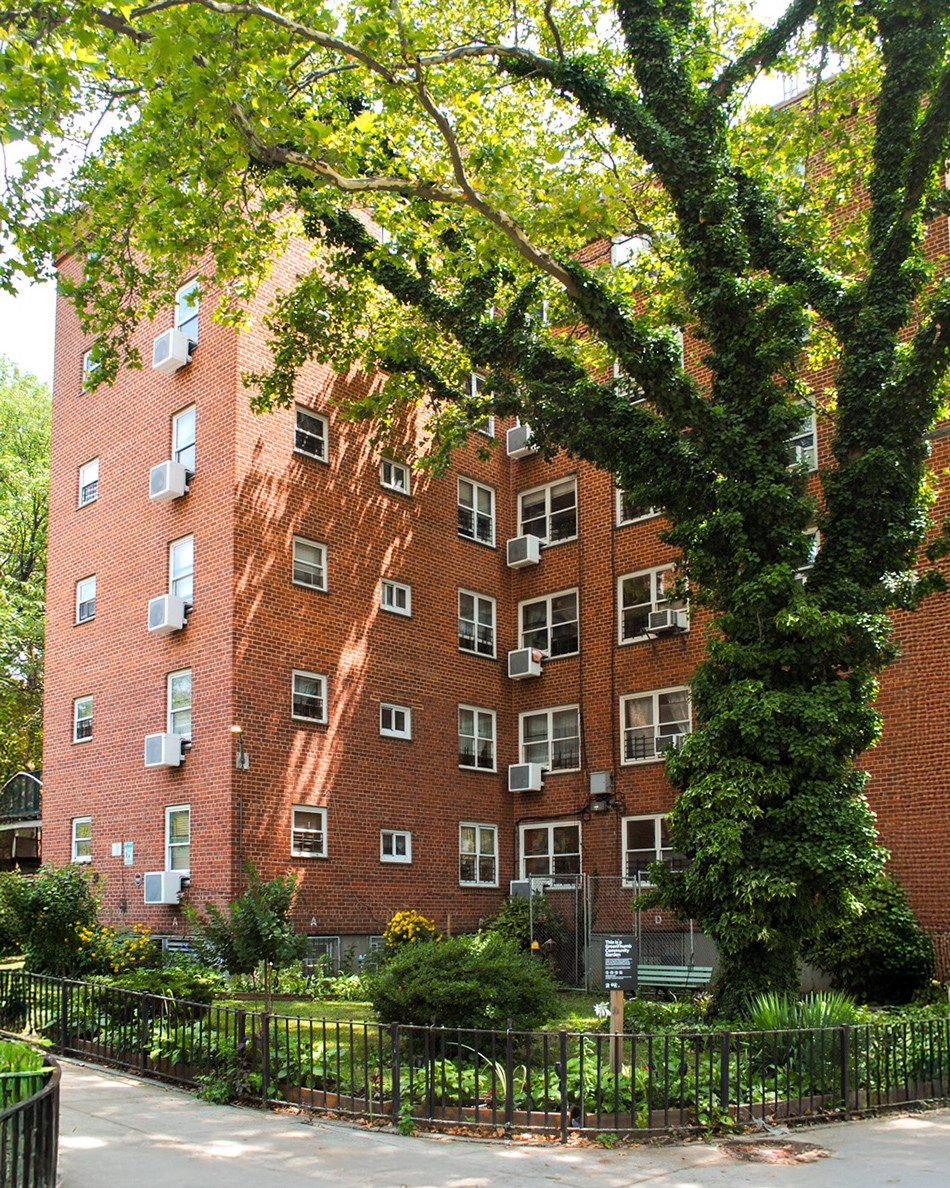
A Cornell study of residents' experiences with electric heat pumps led the New York City Housing Authority to install window-unit pumps at Woodside Houses public housing complex in Queens.
In a new study, conducted over three years and published Dec. 11 in the Journal of Engineering for Sustainable Buildings and Cities, researchers interviewed residents before and after heat pumps were installed in their 10-unit building, replacing a steam boiler system that ran on fuel oil and heated the railroad-style building on a single, set schedule.
The research could help speed adoption of a cleaner alternative to fossil fuel-based heating systems in existing buildings, and has already led directly to a heat pump installation project in public housing in Queens, implemented by the New York City Housing Authority.
“Purely from an engineering perspective, we have a good understanding of heat pump performance and energy consumption, but it’s really important to understand the residents’ perspectives,” said senior author K. Max Zhang, the Irving Porter Church Professor of Engineering in Cornell Engineering and Provost’s Fellow for Public Engagement. “This study brings people to the center of decarbonization. We’re not just talking about it as a noble cause, but as something that can bring tangible benefits to residents.”
With the heat pumps, residents reported the same or improved comfort in all seasons and appreciated the ability to control the temperature in individual rooms. Two years into the study, a roof insulation retrofit further improved residents’ comfort; the intervention reduced the building’s total heat consumption by 25 to 34%, while lowering the heating power needs at peak times by more than 10%.
Globally, existing buildings account for nearly 40% of energy-related carbon dioxide emissions – but public opinion or skepticism often slows the adoption of interventions. Zhang said he’s already fielded inquiries from stakeholders interested in the findings.
“When designers, architects and landlords are making a decision about whether to adopt heat pumps, energy efficiency matters, but equally important is comfort,” said Zhang, a senior faculty fellow in the Cornell Atkinson Center for Sustainability.
The Cornell team analyzed more than 2.5 years of data from 73 temperature sensors placed throughout the building and used power meters to track the building’s total energy consumption over time. But first author Alfredo Rodriguez, Ph.D. ‘24, said the multiple surveys and interviews he and his team of graduate and undergraduate students conducted were an essential complement to the data.
“We got a wealth of information from talking to the residents that we couldn’t pick up just from the sensors,” he said.
For example, residents on the upper floors reported that they couldn’t control the temperatures in certain rooms; upon investigation, the team found areas where the roof had not been properly insulated. After the roof retrofit, conditions improved.
“Those interactions were so beneficial, for us to interpret the data, and for the residents, who got to speak on how the retrofits affect their thermal comfort,” Rodriguez said. “Then we can take that on our end and suggest changes to increase that comfort for them.”
Residents also said they were glad to be rid of the old radiators, which were noisier, took up space and sometimes grew so hot the residents burned themselves.
The study served as a showcase for the use of sensors that don’t rely on a cellular or broadband connection but instead on a low-cost Internet of Things (IoT) network that transmits data through low-frequency radio frequencies. Zhang’s group has been working on demonstrating the potential of low-cost IoT networks in both rural and in dense urban settings where cellular dead spots can limit access to services.
Zhang said the study also provided many students, several of whom were from New York City, with the opportunity to tackle applied challenges while engaging their community. He cited one student in particular, a New Yorker, who found confidence and a sense of belonging through the project.
“This is consistent with our idea of community-engaged learning,” Zhang said. “It can improve belonging and show students that everybody can contribute to their community.”
Co-authors include Lee Humphreys ’99, professor of communication in the College of Agriculture and Life Sciences; doctoral student Ali Amadeh; and Zachary Lee, Ph.D. ’22.
Funding for the study came from the National Science Foundation.
Media Contact
Get Cornell news delivered right to your inbox.
Subscribe