Five from Cornell named 2026 Sloan Research Fellows
By Tom Fleischman, Cornell Chronicle
Five Cornell faculty members are among 126 early-career researchers across North America who have won 2026 Sloan Research Fellowships from the Alfred P. Sloan Foundation.
The Cornell recipients are: danah boyd, the Geri Gay Professor of Communication in the College of Agriculture and Life Sciences; Abe Davis, assistant professor of computer science in the Cornell Ann S. Bowers College of Computing and Information Science; Xiaomeng Liu, assistant professor of physics in the College of Arts and Sciences (A&S); Azahara Oliva, assistant professor of neurobiology and behavior (A&S); and Daniel Stern, assistant professor of mathematics (A&S)
Awarded annually since 1955, the fellowships honor exceptional U.S. and Canadian early-career scholars whose creativity, innovation and research accomplishments make them stand out as the next generation of leaders.
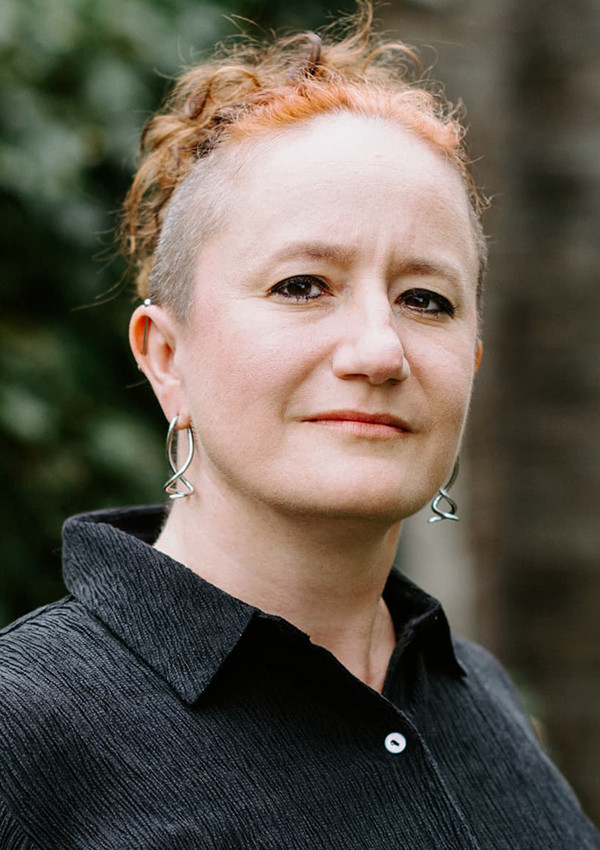
danah boyd
“The Sloan Research Fellows are among the most promising early-career researchers in the U.S. and Canada, already driving meaningful progress in their respective disciplines,” said Stacie Bloom, president and CEO of the Alfred P. Sloan Foundation. “We look forward to seeing how these exceptional scholars continue to unlock new scientific advancements, redefine their fields, and foster the well-being and knowledge of all.”
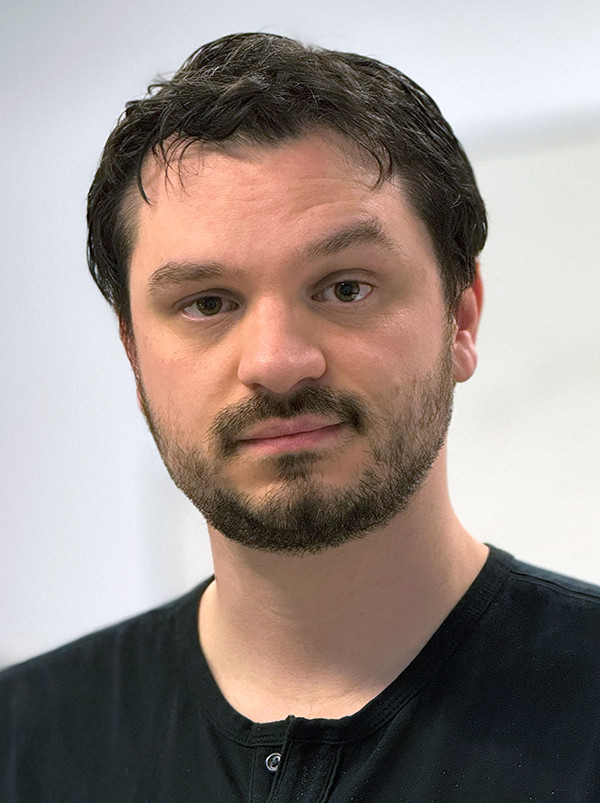
Abe Davis
The fellowships – $75,000 over two years, which the researchers can use flexibly to advance their studies – are open to scholars in seven fields: chemistry, computer science, Earth system science, economics, mathematics, neuroscience and physics.

Xiaomeng Liu
boyd studies the ways that social practices configure technical possibilities – and how technical developments unfold in unexpected ways. boyd’s approach has implications across many established disciplines, including human computer interaction, science and technology studies, and design engineering. Using a range of social science methods and technical skills, boyd’s research seeks to support interventions that create the conditions for socially beneficial outcomes, whether those involve designing new algorithms, organizations, or sets of relationships in a manner that will make certain futures easier to obtain.

Azahara Oliva
Current research themes include: strategies for implementing differential privacy, to ensure the confidentiality of individual records while also publishing tabular data; understanding algorithmic manipulation (search-engine optimization is a classic example); and resisting “deterministic” thinking – the idea that deployment of a given technology will have a known outcome – in design, development, perception and regulation.

Daniel Stern
Davis explores new problems in visual computing and human-computer interaction (HCI). Much of his work focuses on connecting progress in computer science to ideas and applications from other fields through a mix of technical innovation and interdisciplinary design.
For example, his group developed mobile applications for capturing time-lapse data to track wounds in remote health care settings or monitor plant growth, construction, and infrastructure. In another line of work, his group developed a new approach – noise-coded illumination – where nearly imperceptible watermarks are encoded into the physical lighting of protected space to ensure that any video captured in that space will carry the coded watermark.
Liu investigates how collective behavior among electrons gives rise to new quantum properties in advanced materials. His group focuses on two-dimensional materials – crystals a single atom thick – and on structures created by stacking these layers together. This stacking approach allows Liu to design new materials with properties that do not exist in any of the individual layers alone.
To study these systems, Liu and his lab use a combination of low-temperature electrical measurements and high-resolution microscopy techniques that can probe materials down to the atomic scale. In particular, the lab developed and uses scanning tunneling microscopy to examine how electrons behave in these layered materials and devices. Together, these methods allow Liu to connect atomic-scale structure to large-scale electronic behavior in a controlled way.
Oliva researches how global brain states modulate local network activity during learning, memory and decision-making to produce a range of behaviors, such as spatial navigation or social behaviors. She uses rodents in laboratory assays and naturalistic settings implanted with large-scale depth electrodes to monitor how brain-wide networks coordinate the precise temporal dynamics of local neural processes across distributed brain areas.
Her lab applies a broad variety of computational tools for data-mining at the single-cell level, as well as the population dynamics. Ultimately, her research aims to elucidate how the neural processes that generate cognition are built over the variety of biological scales that regulate the physiological states of an organism.
Stern studies problems at the intersection of geometry, partial differential equations (PDEs) and the calculus of variations. Humans have been solving simple variational problems – like finding the shortest path between two points, or the largest area that can be enclosed by a given length of rope – since antiquity, but many of the variational problems we encounter in modern geometry and physics are described by nonlinear systems of PDEs that cannot be solved explicitly, and understanding the space of solutions is typically very challenging.
Stern’s research has addressed these questions in the study of minimal submanifolds and harmonic maps (two higher-dimensional generalizations of the “shortest path” problem), developing new methods for finding solutions by exploiting connections with more tractable problems arising in the study of superconductors, spectral theory and particle interactions.
Founded in 1934, the Alfred P. Sloan Foundation is a nonprofit institution dedicated to improving the welfare of all through the advancement of scientific knowledge. A total of 171 Cornell faculty members have won Sloan Research Fellowships since the first fellowships were awarded more than 70 years ago.
Media Contact
Get Cornell news delivered right to your inbox.
Subscribe