Colleen Barry reappointed Brooks School dean
By James Dean, Cornell Chronicle
Colleen L. Barry, the founding dean of the Cornell Jeb E. Brooks School of Public Policy, will continue to serve in that role for a second five-year term, the university has announced.
The Executive Committee of the Cornell Board of Trustees voted March 9 to approve Barry’s reappointment, effective July 1.
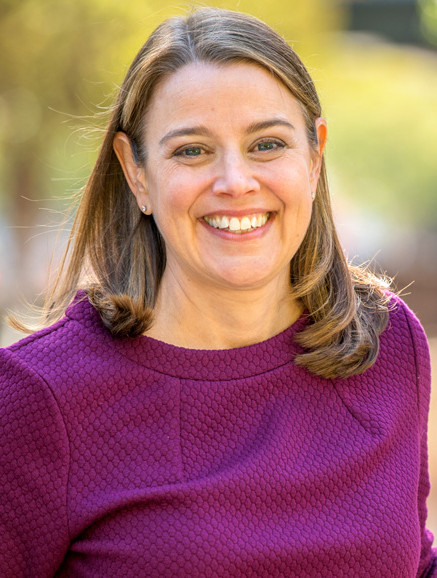
Colleen Barry
“Under Colleen’s leadership, the Brooks School has quickly earned respect as a world-class public policy school,” said Provost Kavita Bala. “Colleen is a highly valued member of the university’s leadership team, and I am excited to see the Brooks School build on the foundation she has established.”
Barry said leading the Brooks School since it opened in 2021 represented a once-in-a-lifetime opportunity to launch a public policy school at an Ivy League university with a land-grant mission and deep commitment to public engagement. She looks forward to the next phase: transitioning from a startup mentality to a more traditional focus on advancing the school’s mission to improve lives through solutions to global policy challenges.
“After an initial period of rapid growth, our focus now is on ensuring that we have the structure in place needed to be successful over a much longer term,” said Barry. “That’s the work of a second term for a founding dean, and I’m excited to do it in partnership with our stellar faculty, staff, students and university leaders.”
Led by Barry, the full-time faculty has grown from 53 to 67 members, and nearly 700 students are now enrolled in undergraduate, professional masters, doctoral and executive programs. The Brooks School has raised more than $77 million through philanthropy – nearly double its goal under the university’s To Do the Greatest Good capital campaign.
Among other achievements, Barry oversaw the launch of four new degrees and established centers and initiatives that have broadened the school’s reach and strengthened its ties to federal, state and local policy leaders.
Examples include DC Start, which last fall welcomed a first cohort of more than 40 undergraduates starting their Cornell careers with a semester in the nation’s capital; and the State Policy Advocacy Clinic, which immerses students in pending issues in the New York State Legislature. The Cornell Brooks School Tech Policy Institute investigates policy related to artificial intelligence and “fourth industrial revolution” technologies.
Across educational initiatives, Brooks aims to ensure students build core analytic skills along with real-world experience, Barry said. Policy engagement is one of three founding pillars identified in the school’s strategic plan, along with purpose-driven research and educational excellence.
Emphasizing the importance of informed dialogue across policy differences, Barry has launched initiatives including the John W. Nixon ’53 Distinguished Policy Fellows, bringing to campus leaders with deep experience and distinctive viewpoints, and inviting to campus alumni serving in Congress and members of New York’s congressional delegation. Barry recently co-taught “Pathways to Purpose: Civic Leadership in Law, Health, Tech and Business,” guiding 350 undergraduates from across the university through conversations about purpose, civic engagement and democracy. Brooks is the first Ivy League policy school to join Service to Service, which helps active-duty and veteran service members pursue public policy careers.
Beyond her responsibilities as dean, Barry conducts research focused on health policy and co-leads the new Cornell Health Policy Center, a partnership with Weill Cornell Medicine in New York City. In 2024-25, she chaired the Committee on Campus Expressive Activity, which recommended changes to the university policy governing protests and other expressive activities.
Looking ahead, Barry plans to continue deepening the Brooks School’s roots in Washington, D.C., while expanding its Ithaca footprint beyond its home in Martha Van Rensselaer Hall into a newly renovated King-Shaw Hall this fall. She is also collaborating with campus leaders to elevate the Center on Global Democracy, launched in Brooks in 2024, to become a universitywide initiative to strengthen democracy and advance civics education.
“As we contend with massive, disruptive shifts through technological advancement, climate change, human migration and geopolitics, our research and the critical public policy skills we teach at Brooks are more relevant than ever,” Barry said. “In my view, Cornell’s decision to launch a policy school better positions the university to meet the challenges we face in this time of dynamic change.”
Media Contact
Get Cornell news delivered right to your inbox.
Subscribe