Reverse engineering ketamine’s effects may lead to new antidepressants
By Bridget Kuehn
Weill Cornell Medicine investigators have reverse engineered ketamine’s antidepressant effects to identify potential new strategies for treating depression.
While many effective treatments for depression are available, not all patients respond to them. About one-third of patients must try multiple medications before finding relief, and another third have treatment-resistant depression. Ketamine, an anesthetic, can provide immediate relief to some patients with treatment-resistant depression, but the effects are often short-lived. Ketamine also has serious side effects for some patients, including changes in heart rate or blood pressure, feelings of being disconnected from one’s thoughts or self, and addiction.
“We really need new treatments,” said Dr. Conor Liston, M.D. ’08, the Robert Michels, M.D. Professor of Psychiatry in the Department of Psychiatry and a professor of neuroscience at the Feil Family Brain and Mind Research Institute at Weill Cornell Medicine. “By understanding how ketamine works, we hoped to find new ways of achieving similar antidepressant effects rapidly, without some of those side effects.”
Pinpointing the mechanism behind ketamine’s initial benefits
Previous studies showed that drugs that block opioid receptors in the brain interfere with ketamine’s antidepressant effects, indicating that these receptors play a role in its activity. Liston teamed up with Joshua Levitz, a professor of biochemistry and biophysics at Weill Cornell Medicine, to identify precisely which ones were key.
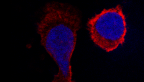
In a study published April 23 in Cell, they showed that ketamine targets a specific subset of opioid receptors on interneurons, specialized brain cells in the prefrontal cortex, a brain region that plays a central role in emotion, attention and behavior. The interneurons act as a master regulator of cell activity in this brain region, Levitz said. But excessive stress causes these cells to become hyperactive and unduly suppress overall brain cell activity in the prefrontal cortex, contributing to depression. Ketamine can reverse this effect by stimulating the opioid receptors to tamp down the interneurons’ activity.
“Ketamine targets these opioid receptors, relieving inhibition by the interneurons and reactivating prefrontal cortex cells for a very brief period of time – maybe only for 15 or 20 minutes,” said Levitz, who is also a professor of biochemistry in psychiatry at Weill Cornell Medicine. “That seems to be enough to kickstart this whole program of cortical reawakening.”
The team also showed that it could recreate ketamine’s antidepressant effects in mice by combining small doses of three drugs that target the same pathway, which may provide an effective alternative to ketamine with fewer side effects.
“This synergistic strategy could produce rapid antidepressant effects at much lower doses of each compound,” said Liston, who is also a psychiatrist at NewYork-Presbyterian/Weill Cornell Medical Center. “By avoiding higher doses, we can avoid side effects.”
Hermany Munguba, a postdoctoral associate with Liston and Levitz at the time of the study, and Anisul Arefin, a doctoral candidate in the Levitz lab, were co-first authors of this study.
Maintenance of antidepressant effects requires multiple signals in brain cells
The second study, a collaboration between the laboratories of Levitz and Dr. Francis Lee, chair of psychiatry and the Jack D. Barchas, M.D. Professor of Psychiatry at Weill Cornell Medicine, provided new insights into ketamine’s longer-term antidepressant effects.
Published May 1 in Science Advances, the study confirmed in a preclinical model that cross-talk in the brain cells between the receptors TrkB and mGluR5 is essential to maintaining ketamine’s antidepressant effects, building on previous cell and tissue studies by the team.
“Ketamine was always known to target different receptors, called NMDA receptors, in the brain,” said Lee, who is also psychiatrist-in-chief at NewYork-Presbyterian/Weill Cornell Medical Center. “Finding that mGluR5 receptors are involved in ketamine’s antidepressant effects is novel.”
Previous studies have shown that ketamine and other antidepressants trigger the release of brain-derived neurotrophic factor (BDNF), a protein that promotes the survival, growth and function of brain cells. Delving deeper into the mechanism by which it exerts its effects, the team showed that BDNF stimulates the tyrosine kinase receptor TrkB and promotes interaction with the mGluR5 receptor, an interaction that strengthens connections and improves communication between brain cells.
This interaction also leads to the removal of some of the mGluR5 receptors from the cell membrane, preventing excessive communication between the cells from triggering a weakening of the synapses by the receptors.
“Drugs that drive these interactions strengthen all the brain connections that have been weakened during depression, which helps promote initial and longer-term antidepressant effects,” Levitz said. “It both makes the brain connections stronger and removes the ability to weaken brain connections.”
Anisul Arefin, Dr. Jihye Kim, an assistant professor of psychiatry at Weill Cornell Medicine; and Manas Pratim Chakraborty, a former postdoctoral associate in the Levitz lab, were co-first authors of the study.
Moving the findings into the clinic
Liston and his colleagues are preparing to launch a clinical trial testing whether combining small doses of existing drugs, which have already been shown to be safe and effective in humans, may recreate in patients the antidepressant effects seen in the Cell study.
“If that’s true, we could get these new therapies to patients on an accelerated timeline,” Liston said.
Lee and Levitz are continuing to study whether combining low doses of existing drugs that target mGluR5 receptors with low doses of ketamine may also deliver lasting antidepressant effects with fewer side effects, with the goal of eventually launching a clinical trial. This rapid translation of their findings has been facilitated by the teams’ multidisciplinary expertise in clinical psychiatry, molecular signaling and biochemistry, Lee said.
Overall, efforts to better understand existing drugs will help improve their use and help clinicians develop evidence-based drug combinations rather than using a trial-and-error approach.
“These two studies together reframe how we think about how ketamine works for our patients,” Lee said. “It shows patients that we are making progress towards innovative therapies and will help them understand the treatments they are receiving.”
The research reported in this story was supported in part by the National Institute on Drug Abuse, the National Institute of Mental Health and the National Institute of Neurological Disorders and Stroke, all part of the National Institutes of Health. Additional support was provided by the Swedish Research Council, the Brain & Behavior Research Foundation, the Horizon Europe Framework Programme, the Rohr Family Research Scholar Award, the Monique Weill-Caulier Award, the Jake Collective, the Hope for Depression Research Foundation, the Pritzker Neuropsychiatric Disorders Research Consortium and The Burroughs Welcome Fund.
Many Weill Cornell Medicine physicians and scientists maintain relationships and collaborate with external organizations to foster scientific innovation and provide expert guidance. The institution makes these disclosures public to ensure transparency. For this information, see profile for Dr. Conor Liston.
Bridget Kuehn is a freelance writer for Weill Cornell Medicine.
Media Contact
Get Cornell news delivered right to your inbox.
Subscribe