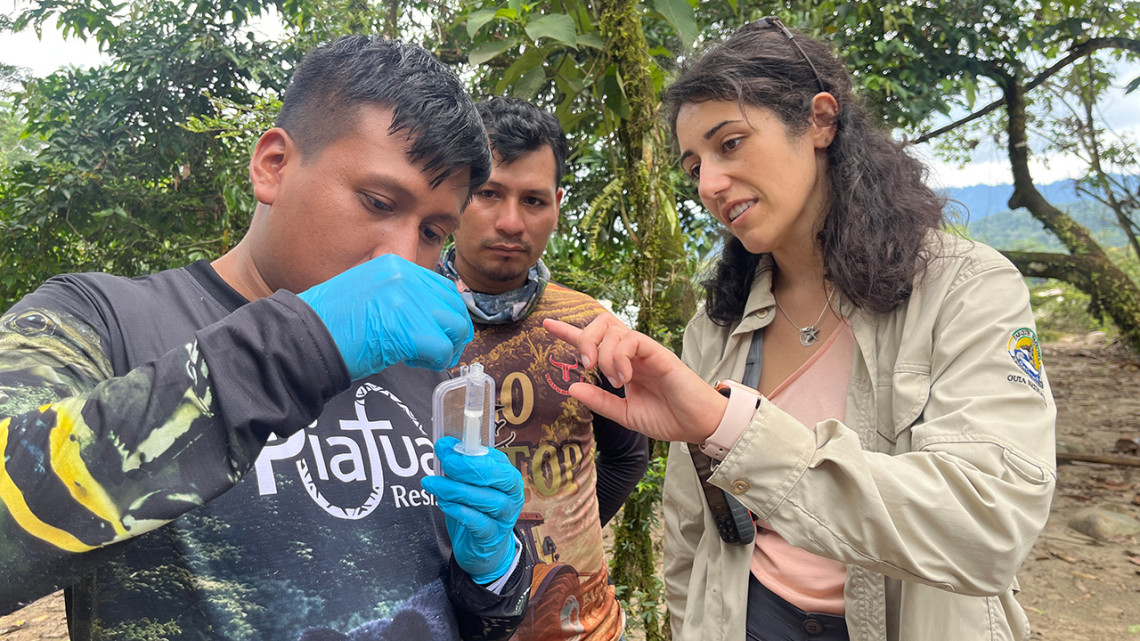
Cornell doctoral student Isabella Marie Errigo and Indigenous partners collect eDNA samples from a remote river in the Ecuadorian Amazon, helping communities assess aquatic biodiversity and ecosystem health across a range of environmental conditions.
News directly from Cornell's colleges and centers
Student, Indigenous partners use eDNA to aid biodiversity in Ecuador
By Krisy Gashler
A partnership between Cornell researchers and indigenous communities in the Ecuadorian Amazon is marrying traditional and scientific knowledge to protect river ecosystems and their rich biodiversity.

Using their expert knowledge of local waterways, Indigenous conservation partners navigate remote river corridors by kayak to reach sampling locations inaccessible by road.
Isabella Marie Errigo, a doctoral student in the graduate field of natural resources and the environment, has been working in Ecuador since 2019, including living in the country for one year as a Fulbright scholar. During that time, she attended a festival celebrating the Jondachi River and met some of the kayakers who organize the yearly event. They discussed their shared commitment to conserving the country’s natural resources and realized that their diverse skillsets could strengthen each other’s goals.
“They were very excited to hear that I was an aquatic ecologist interested in conservation in Ecuador, and I was excited to meet people who can get out onto the river and access the remote areas I want to sample,” Errigo said.
Errigo is now working in collaboration with two indigenous Kichwa-led organizations: Yaku Churi, an after-school program that teaches indigenous youth conservation, sustainable carpentry and kayaking; and Piatua Resiste, a community-led conservation organization.
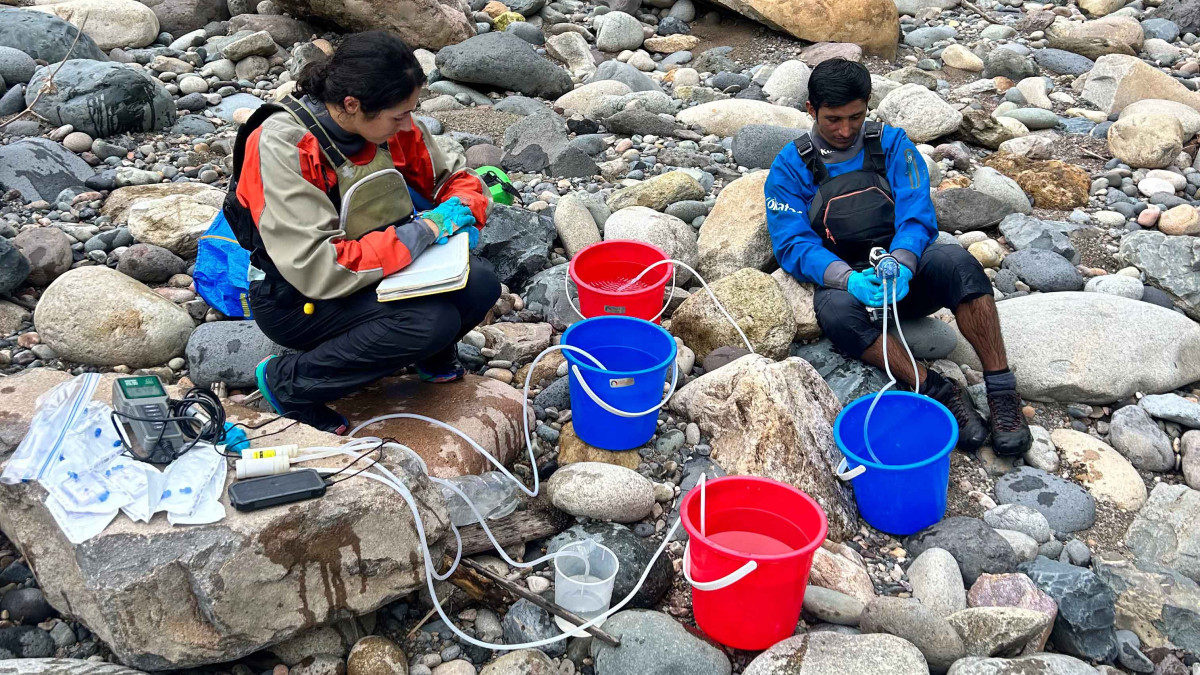
Sampling sites upstream and downstream of gold mining operations will help researchers understand how mining-related disturbances influence aquatic biodiversity and ecosystem health.
With support from the Cornell Atkinson Center for Sustainability and Global Cornell, Errigo and her Ecuadorian partners worked together for three months to take environmental DNA (eDNA) samples. They sampled 60 sites within four major rivers and their tributaries. Thanks to the kayaking skills of her partners, they were able to access remote, pristine areas of the river Errigo never would have been able to reach alone, she said. They also sampled rivers near cities, where a variety of contaminants, including human waste, end up in waterways, and in areas upstream and downstream of gold mining sites. Gold mining operations clear cut forests along river banks, increasing flooding and soil erosion, and they release mercury into the environment, harming humans and nature.
“Right now, I will use my eDNA samples to look at fish and aquatic insect communities because those are groups that can tell us a lot about the health of an ecosystem,” Errigo said. “Some species are really sensitive to contaminants and some are more resilient. If you’re finding a very diverse community of fish and insects, that means those rivers are pretty healthy. If you’re not finding any animals, or you’re only finding animals that are really resilient to contamination, then likely that’s very contaminated water. eDNA gives us a lot of information about how these disturbances are actually impacting the water and the diversity that exists there. And by comparing what we are finding at contaminated sites to what we find in less-impacted ones, we will better understand what we stand to lose if we continue treating our planet the way we have been.”
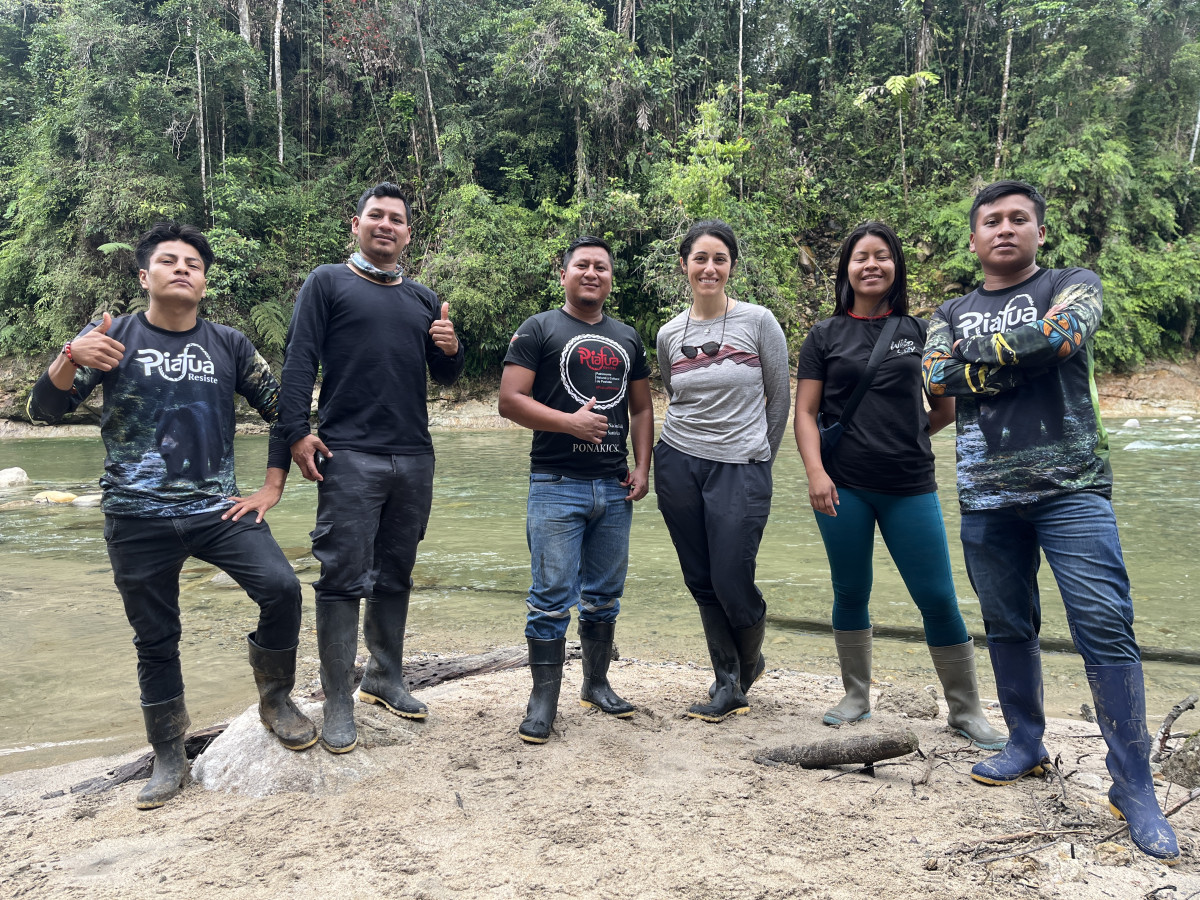
After receiving training in eDNA collection techniques, Indigenous conservation leaders continue monthly monitoring efforts that will generate a year-long record of environmental change.
After being trained in sampling techniques by Errigo, the Ecuadorian partners are continuing to sample three of the sites, once a month for a full year. The sites – one pristine, one upstream of a mining operation and one downstream – fall along routes that the conservation partners regularly kayak. The results will provide insights into fish migrations and environmental dynamics along the rivers, and will empower native partners to advocate for policies to protect the rivers, Errigo said.
“I believe that knowledge is power and that science really does have the ability to inform decisionmakers and communities, and to support people in their fight for things they care about,” she said. “I hope that what we’re doing will give the people who care so much about their rivers information that they can hand to decisionmakers. I hope that I can be part of the fight for the rainforest and for the people here. Because the forests are amazing and the biodiversity is amazing and the people are amazing, and all of it is being harmed by these mining operations.”
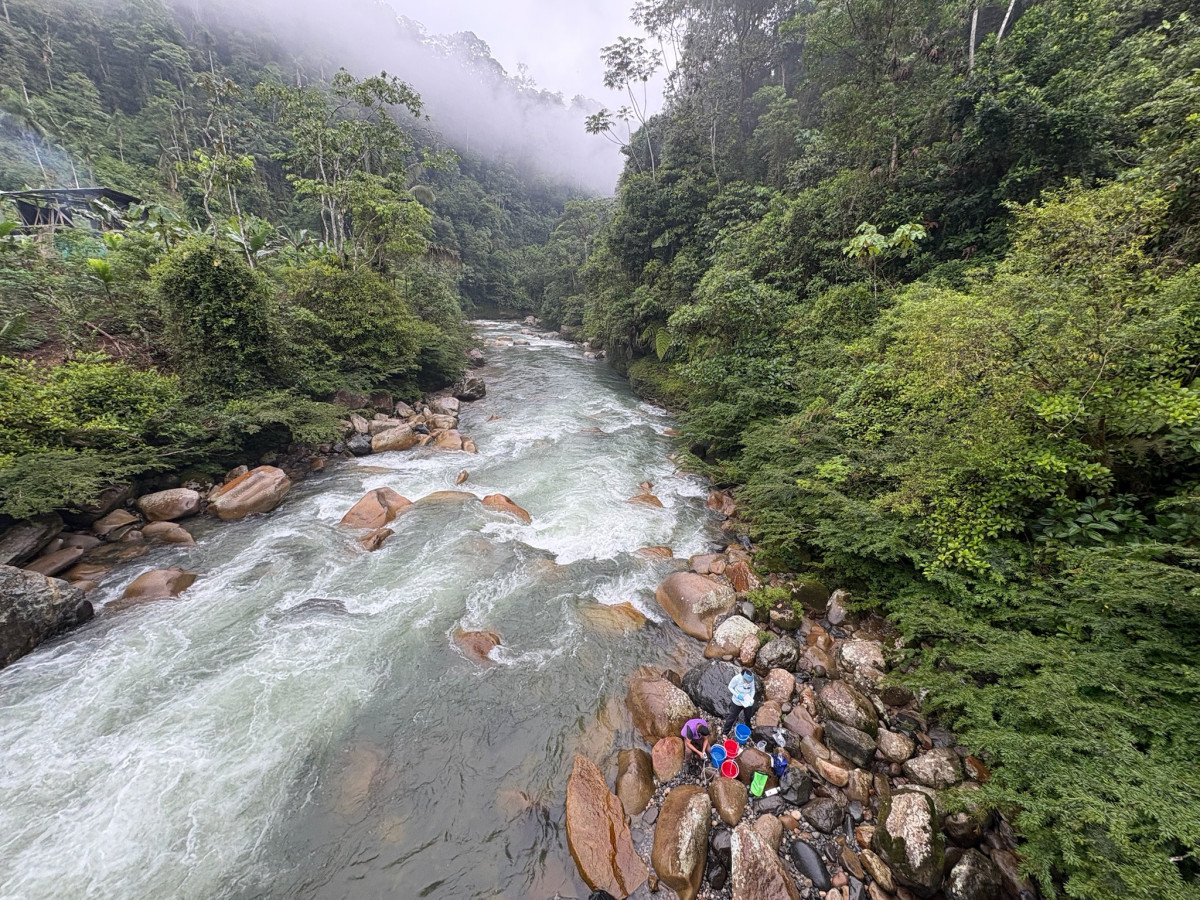
The research combines scientific methods with Indigenous stewardship and local ecological knowledge to support community-led conservation across the Ecuadorian Amazon.
Errigo is co-advised by Peter McIntyre, professor, and Jose Andres, senior research associate, both in the Ashley School of Global Development and the Environment in the College of Agriculture and Life Sciences.
This research is supported by a Sustainable Biodiversity Fund grant from Cornell Atkinson and by a Global Hubs seed grant from Global Cornell.
Krisy Gashler is a writer for Cornell Atkinson Center for Sustainability.
Media Contact
Get Cornell news delivered right to your inbox.
Subscribe