Twenty Cornell faculty members were awarded Affinito-Stewart research grants for the 2022-2023 academic year. The grants, which are awarded by the President’s Council of Cornell Women (PCCW), provide junior faculty members from across the university with up to $10,000 in research funding.
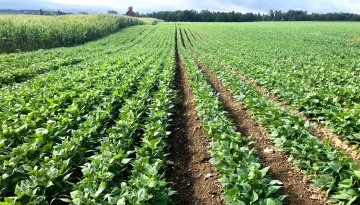
Cornell AgriTech is leading a multidisciplinary research project to increase the sustainability of the organic dry bean industry in the Northeast and upper Midwest by overcoming production challenges while developing improved management practices that build soil health and resilience to climate change.
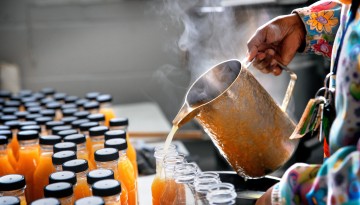
For more than 30 years, the Cornell Food Venture Center (CFVC) has helped entrepreneurs transform family recipes and homemade eats into successful commercial food products. Now, a new online program from Cornell is expanding access to the CFCV’s expertise and supporting the growth of food entrepreneurs around the globe.
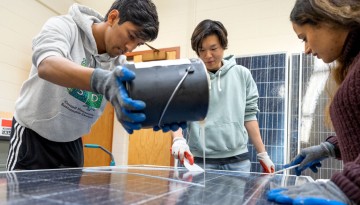
Using polyurethane, resin, epoxy – and gallons of wit – the Solar Panel Reboot student team, part of the Cornell University Sustainability Design, provides an afterlife to old, broken photovoltaic boards.
Drew Harvell, professor emerita of ecology and evolutionary biology who studies sustainable marine biodiversity, is one of seven U.S. researchers named 2023 U.S. Science Envoys by the Department of State.
President Martha E. Pollack has established a task force to interrogate all aspects of the undergraduate admissions process and to recommend a universitywide admissions policy and best practices that will be guided by Cornell’s founding mission and can be adapted by the admissions offices of each school and college.
Unrelenting climate change is leading to extended, late-summer weeks of water stratification, which prompts varying degrees of oxygen deprivation in lakes, says new Cornell research.
Researchers from the Department of Communication state that at the current rate of diversification, U.S. colleges and universities will never achieve racial parity that’s on par with the rest of the country, but that steps can be taken to make it happen.
Researchers from Boyce Thompson Institute and Cornell have identified genes that could help plant breeders develop drought-resistant fruit, through a study that provided the first-ever comprehensive picture of how a fruit’s gene expression changes in response to water stress.