For the fourth consecutive year, the Cornell Food Product Development Team, made of undergraduate students and graduate, has been named as one of six finalists in the Institute of Food Technologists' Student Association 1998 Product Development Competition, to be held in Atlanta.
Interest in gardening will germinate at a Cornell workshop July 22 at the Schurman Hall/Education Center (Cornell Veterinary College). The workshop's theme is "Cultivating Community Through Youth Gardening."
Now add one more reason to eat plenty of fruits and vegetables: Their antioxidants seem to help protect lung function and may help prevent asthma, emphysema and chronic bronchitis, according to a new study.
It makes wine smell like a barn, wet leather, horse sweat, or burned beans. It is called "brett," and it produces an often-pungent aroma in wine. Scientists are starting to unravel the chemical mysteries that produce the curious aroma found in fermented beverages like wine and beer
Humans' use of antimicrobial spices developed in parallel with food-spoilage microorganisms, Cornell University biologists have demonstrated in a international survey of spice use in cooking. (March 4, 1998)
Jane Mt. Pleasant, director of the American Indian Program at Cornell, was presented with the highest honor of the American Indian Science and Engineering Society at the organization's national conference in Houston in November.
New York state red wines have higher levels of resveratrol -- a naturally occurring substance in grapes that has been found to reduce the chance of heart disease and cancer -- than comparable wines from other regions of the world.
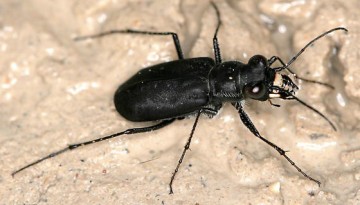
Reminder to tiger beetles: If you chase prey at high speeds, you'll go blind. Entomologists have long noticed that tiger beetles stop-and-go in their pursuit of prey. But until now, scientists have had no idea why this type of beetle attacks its food in fits and starts.
A few hundred more generators are needed to help dairy farmers in northern New York in the wake of the recent ice storm, Cornell Cooperative Extension officials say. "Helping dairy farms is a top priority," said Edward Harwood of Cornell Cooperative Extension in Cornell's College of Agriculture and Life Sciences.