Natalie Wolchover will explain how she turns discoveries in physics and mathematics into compelling, accurate narratives that engage lay readers and scientists
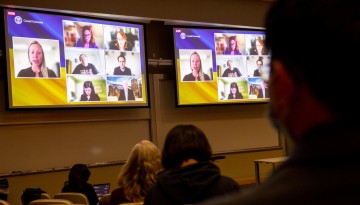
Clarity about the goals of sanctions against Russia will be key to attempts to de-escalate the conflict, Cornell faculty experts said during a March 4 panel discussion.
In the Society for the Humanities podcast, two undergraduate researchers share information they uncovered about the fraught legacy of nineteenth century historian Goldwin Smith.
Historian Daniel Immerwahr will re-establish the central importance of forests and fire to the settlement of the American West in the nineteenth century during this year's LaFeber-Silbey Lecture.
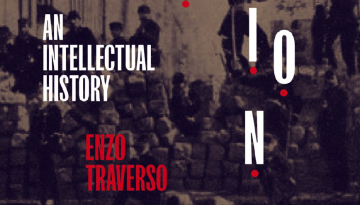
In “Revolution: An Intellectual History,” Enzo Traverso reinterprets the history of nineteenth and twentieth century revolutions through a constellation of images, from Marx’s ‘locomotives of history’ to Lenin’s mummified body to the Paris Commune’s demolition of the Vendome Column.
A letter signed by 163 Nobel Prize laureates, and drafted by Cornell Nobel laureate Roald Hoffmann, condemned Russia’s attack on Ukraine and expressed support for the Ukrainian people.
Based on her in-depth study of ordinary people in Russia, Leila Wilmers explores how we engage the principles of nationalism in making sense of uncertainty and disruptive social change.
Eleven assistant or associate professors representing four colleges have recently received National Science Foundation Faculty Early Career Development Awards to support their research objectives.