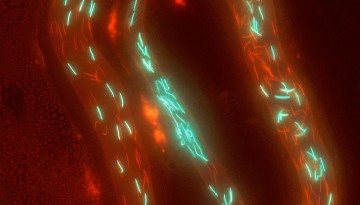
Long considered exclusively male, a new study revealed that by four days after a sperm enters a female fruit fly, close to 20% of its proteins are female-derived.
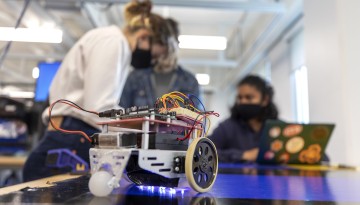
The Active Learning Initiative has announced its Phase IV grants. The winning proposals, from Classics, Government, History, the Sibley School of Mechanical and Aerospace Engineering, and the Meinig School of Biomedical Engineering, included collaborations that extend across Cornell.
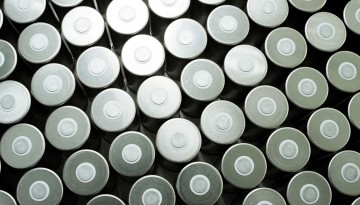
A nitrogen doped carbon-coated nickel anode can catalyze an essential reaction in hydrogen fuel cells at a fraction of the cost of the precious metals currently used, Cornell researchers have found.
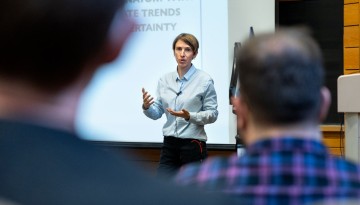
On March 15, award-winning science journalist Natalie Wolchover, Zubrow Distinguished Visiting Journalist in the College of Arts and Sciences, gave a master class on “Bringing Science to Life Through Storytelling” in Lewis Auditorium.
Artificial Intelligence, Design + Technology and Quantum Science and Technology will become part of “Radical Collaboration Drives Discovery,” bringing to 10 the number of initiatives in the provost office’s five-year-old program.
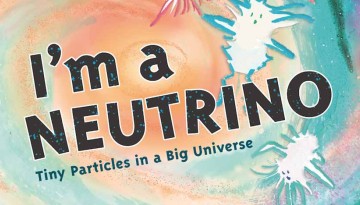
Physics researcher Eve Vavagiakis published “I’m a Neutrino: Tiny Particles in a Big Universe,” a picture book introducing children (and adults) to tiny particles that have an outsized effect on the universe.
Policymakers, legislators and military strategists must prepare for the consequences of other countries and actors such as the Islamic State using drones, according to panelists in a Cornell discussion March 14.