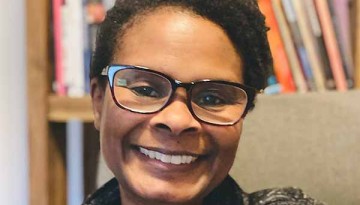
Kim Gallon, associate professor of history at Purdue University, will demonstrate how computational humanities offers an opportunity to redefine “crisis” through the Black American experience and turn it into a defining moment for the recovery and reimagination of Black humanity.
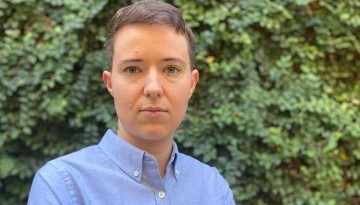
During a three-year Klarman Postdoctoral Fellowship, Amalia Skilton will study joint attention behaviors – which include pointing – by doing field work in Peru's Amazon basin.
Ziad Fahmy won a 2021 book prize from the Urban History Association (UHA) for “Street Sounds: Listening to Everyday Life in Modern Egypt." Fahmy’s book was recognized for Best Book in Non-North American Urban History.
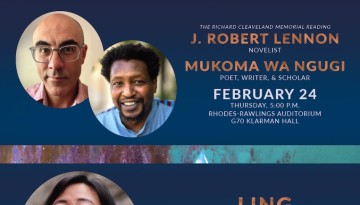
Beginning Feb. 24, the Spring 2022 Barbara & David Zalaznick Reading Series will feature a wide range of artistic styles and voices from around the world.
A new study from Cornell University finds that fish are far more likely to communicate with sound than previously thought — and some fish have been doing this for at least 155 million years.
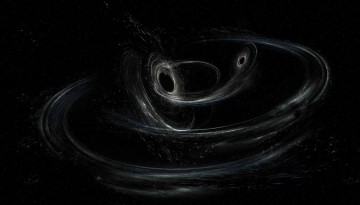
Research done at Cornell has uncovered the first potential signs of spin-orbit resonances in binary black holes, a step toward understanding the mechanisms of supernovas and other big questions in astrophysics.
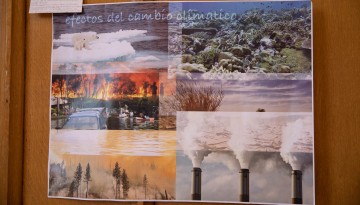
On December 7, Emilia Illana Mahiques and Macarena Tejada López, lecturers in Romance Studies in the College of Arts and Sciences, showcased a student art exhibit assignment on social justice concepts with support from the Center for Teaching Innovation and Language Resource Center.
Seven Cornell faculty members have been elected fellows of the American Association for the Advancement of Science, the world’s largest general scientific society. This year's fellows, 564 in all, will be honored at a virtual event Feb. 19.