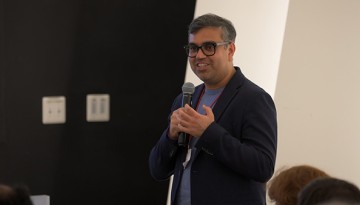
Peter John Loewen, the Harold Tanner Dean of Arts and Sciences, shared takeaways from his decade-long AI research during a lecture kicking off the Cornell University School of Continuing Education’s Summer Events Series.
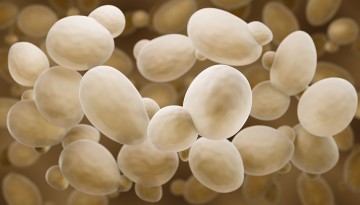
Cornell researchers have found that peaceful microbes are more likely to thrive, and their more aggressive peers perish, if their environment is harsh or experiences violent disruptions.
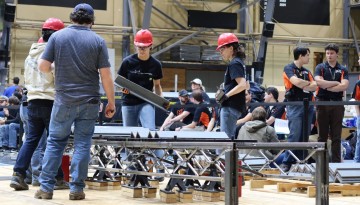
Cornell’s Steel Bridge Team excelled in the 2024 AISC competition with a 216-pound bridge that supported 2,500 pounds, placing first in lightness. Key to their success was access to the LASSP Student Machine Shop, where expert support and flexible hours enabled fast, high-quality fabrication and extra time for testing and refinement.
In a new study, researchers detail their novel approach for both detecting and controlling the motion of spins within antiferromagnets using 2D antiferromagnetic materials and tunnel junctions, which could lead to ultra-fast information transfer and communications at much higher frequencies.
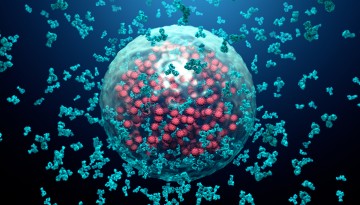
Cornell chemistry and chemical biology researchers have found a new and potentially more accurate way to see what proteins are doing inside living cells — using the cells’ own components as built-in sensors.
Leading AI scholars met to discuss fundamental design problems and systemic issues with large language models (LLMs) and how they could better serve the global population.