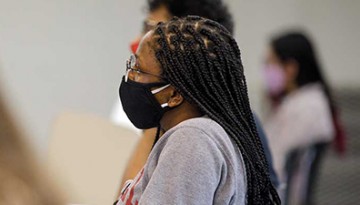
The new Gender and the Security Sector Lab, launched Jan. 4, is using an interdisciplinary, social scientific approach to study the role of gender in security forces – including police, military and peacekeeping forces.
Héctor D. Abruña has been honored by the American Chemical Society with the ACS National Award in Analytical Chemistry for his pioneering work in electrochemistry, including the development of fuel cell and battery materials.
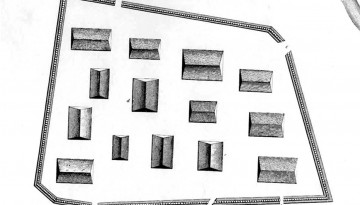
Cornell and National Park Service researchers have pinpointed the exact location of a Tlingit fort in Sitka, Alaska used in 1804 to defend against Russian colonization forces.
Archivists, curators and librarians are finding virtual ways to help faculty members teach, using gems from Cornell University Library’s rare collections, from medieval texts on parchment to punk show flyers.
Far below the gaseous atmospheric shroud on Saturn’s largest moon, Titan, lies Kraken Mare, a sea of liquid methane, which astronomers have estimated to be at least 1,000 feet deep.
Changes make the curriculum easier for students to navigate, simplify the graduation requirements and expand student opportunities for interdisciplinary work and faculty opportunities for innovative teaching.
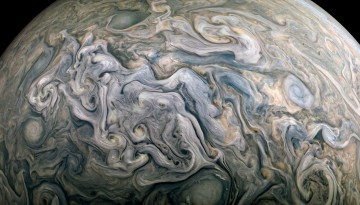
NASA’s Juno spacecraft and the InSight lander have both received mission extensions, the space agency announced Jan. 8. Cornell astronomers serve key roles on both projects.
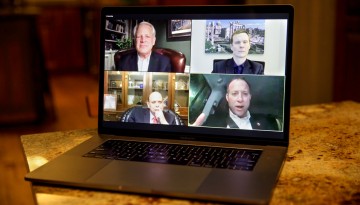
A conversation with the co-chairs of the Problem Solvers Caucus in the U.S. House of Representatives kicked off the Institute of Politics and Global Affairs’ Campaign for the Future of Democracy on Jan. 13.
The College Scholar Program in the College of Arts & Sciences allows students to design their own interdisciplinary major, organized around a question or issue of interest, and pursue a course of study that cannot be found in an established major.