Astronomers, including Cornell’s Steve Choi, have used observations, plus a bit of cosmic geometry, to propose that the universe is 13.77 billion years old – give or take 40 million years.
A study of the size, duration and actors involved in more than 100,000 conflicts suggests a model that can make quantitative predictions about the structure of war on large scales.
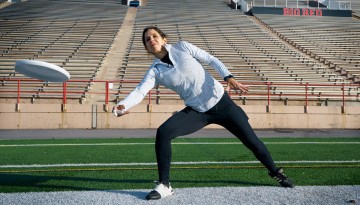
For more than two decades, Vivian Zayas '94, associate professor of psychology, chased Ultimate Frisbee from Cornell’s campus to international championships on the semi-pro club circuit, all the way to the Ultimate Hall of Fame, which inducted her in October.
Assistant professor Natasha Holmes redesigned her course Physics of the Heavens and Earth with innovative active learning activities so that non-majors could better understand the concepts.
This month, a crew of mostly Native ironworkers on the North Campus Expansion Project presented Native students with the cloth image of the Hiawatha wampum belt they’d flown from their crane.
Derrick Spires has won the Modern Language Association (MLA) Prized for a First Book for “The Practice of Citizenship: Black Politics and Print Culture in the Early United States.”
By delving into scientific and economic data, Cornell engineers have examined whether New York could achieve a statewide carbon-neutral economy by 2050. Their finding: Yes – and with five years to spare.
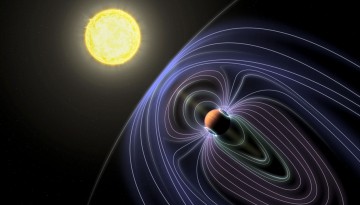
By using a radio telescope array, a Cornell postdoc and an international team of scientists may have detected emissions from a planet beyond our own solar system.