The Politics of Race, Immigration, Class and Ethnicity, a new initiative in the College of Arts and Sciences, will hold its first event, a webinar featuring discussion about the abolition of police, July 27 at 1 p.m.
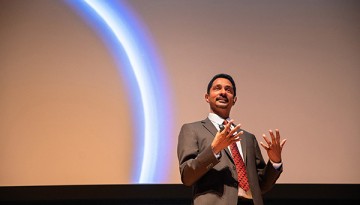
Ray Jayawardhana, the Harold Tanner Dean of Arts and Sciences and professor of astronomy, delivered a keynote address to approximately 1,000 K-12 teachers at the National Math and Science Initiative virtual conference.
A Cornell-led collaboration has used state-of-the-art computational tools to model the chaotic behavior of Planckian, or “strange,” metals. This behavior has long intrigued physicists, but they have not been able to simulate it down to the lowest possible temperature until now.
What can faculty, students and community members be doing in response to institutional racism and its role in shaping health equity? A webinar organized by the Cornell Center for Health Equity will examine this question.
The Roper Center for Public Opinion Research at Cornell has identified and made available more than 80 years of public opinion surveys of Black Americans and U.S. public views of Black America.
A new podcast on “Unsettled Monuments, Unsettling Heritage,” launched in the spring, showcases the work of the Public Life fellowship group, part of the humanities-focused Radical Collaboration initiative.
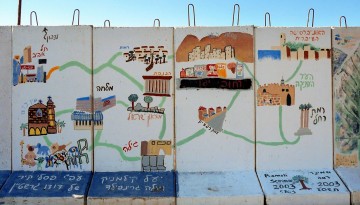
Maps are more than two-dimensional representations of three-dimensional terrain – they are also powerful political tools to control territory, as sociologist Christine Leuenberger explains in her new book.