Since requesting proposals in April, the Cornell Atkinson Center for Sustainability has awarded approximately $250,000 in rapid-response grants for COVID-19-related Cornell research.
Ray Jayawardhana, the Harold Tanner Dean of Arts and Sciences and professor of astronomy, has been awarded the 2020 Carl Sagan Medal by the Division for Planetary Sciences of the American Astronomical Society.
Peter McMahon, assistant professor of applied and engineering physics in the College of Engineering, and Brad Ramshaw, the Dick & Dale Reis Johnson Assistant Professor of physics in the College of Arts and Sciences, have been named CIFAR Azrieli Global Scholars.
Cornell researchers are leading a review on the risk of coronavirus transmission through breast milk intake and breastfeeding, to inform WHO guidelines during the pandemic.
The World Economic Forum’s Strategic Intelligence website has tapped Nicholas Mulder, assistant professor of history, to share his expertise in geo-economics.
Machine learning can assess the effectiveness of mathematical tools used to predict the movements of financial markets, according to new Cornell research.
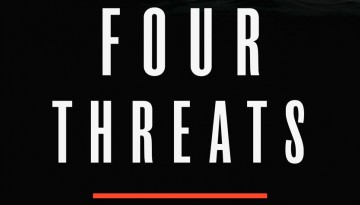
In “Four Threats,” a new book co-authored by government professor Suzanne Mettler, the authors not only assert that history repeats itself – they also identify the underlying causes of democracy destabilization.
Kate Manne, an associate professor of philosophy in the College of Arts and Sciences, tackles male entitlement in her second book, “Entitled: How Male Privilege Hurts Women,” released Aug. 11.
A team of chemists, including Cornell’s Paul Houston, has unveiled the mechanics involved in the interplay between sunlight and molecules known as “roaming reactions,” which could improve climate change modeling.