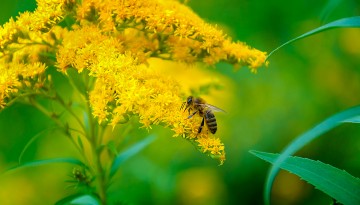
By editing specialized genes into laboratory fruit flies, scientists have reconstructed evolution and instantly conferred in the flies the same toxin resistance enjoyed by monarch butterflies.
Science may be inching closer to thwarting obesity, heart disease and Type 2 diabetes, as Cornell biochemists have uncovered a key step in how the human body metabolizes sugar.
The second annual Intercampus Cancer Symposium, Oct. 11 at the Cornell College of Veterinary Medicine, will highlight the wide range of cancer research taking place at Cornell’s Ithaca campus and at Weill Cornell Medicine in New York City.
New Cornell research is pointing the way toward an elusive goal of physicists – high-temperature superfluidity – by exploring excitons in atomically thin semiconductors.
This year’s Innovative Teaching and Learning Award winners will give Cornell students a host of new opportunities and experiences, thanks to faculty grants ranging from $5,000 to $25,000.
New research finds that, under threat, plants can communicate with one another in the form of airborne chemicals known as volatile organic compounds, which transfer information.
Twenty-four faculty members, representing six colleges and the Cornell University Library, make up the 2019-20 cohort of the Engaged Faculty Fellowship Program.
Historian Francis J. Gavin will discuss the importance of the 1970s in U.S. and world history in this year’s LaFeber-Silbey Lecture, Oct. 3 at 4:30 p.m. in Kaufmann Auditorium, Goldwin Smith Hall.
A $6 million anonymous gift from alumni will help launch the Humanities Scholars Program in the College of Arts and Sciences, offering a signature learning, research and collaboration opportunity to students from across the university interested in humanistic inquiry.