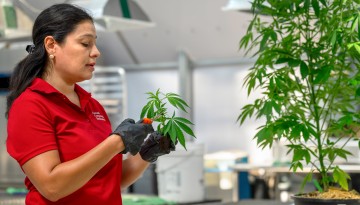
A new manual will provide guidelines for New York state growers of hemp – a crop with the potential to revitalize economies while revolutionizing industries from fiber to pharmaceuticals.
Plant biologist Laura Gunn has been awarded a Department of Energy Early Career Award to study ancient enzymes for potential use in modern photosynthesis.
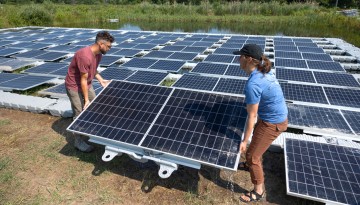
Steve Grodsky, assistant professor of natural resources, and a multidisciplinary team of researchers, soon will learn how solar panels placed on top of water bodies can affect the biology of aquatic systems.
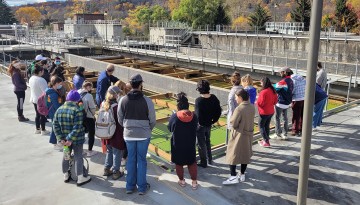
With funding from the Einhorn Center for Community Engagement, teams of Cornell faculty, staff and community partners are creating new community-engaged learning opportunities for undergraduates.
Research by J. Nathan Matias, assistant professor of communication in CALS, found that Reddit community members who fact-checked suspect stories led to those stories being dropped in the website’s rankings.
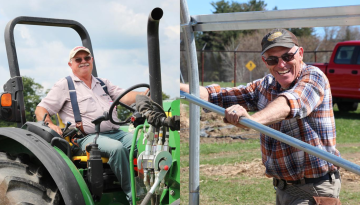
Cornell Agricultural Experiment Station farm managers Steve McKay and Paul Stachowski have retired after 38 and 32 years of service to the university, respectively.
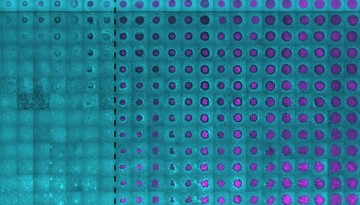
Cornell researchers developed a multimodal platform to image microbe-semiconductor biohybrids with single-cell resolution, to better understand how they can be optimized for more efficient energy conversion.