In a nationwide campaign led by Cornell students, more than 500 scientists have committed to writing letters and op-eds in their hometown newspapers across all 50 states – each one a personal appeal on why public investment in research matters.
Researchers project significant energy gains from using floating solar on just 3.5% of waterbodies in the Northeastern U.S., even with approaches that preserve biodiversity and recreation.
A new $1.5 million gift from philanthropist K. Lisa Yang ’74 has established the Charles Walcott Graduate Research Fellowship in Conservation Bioacoustics to fund graduate research at the Lab of Ornithology.
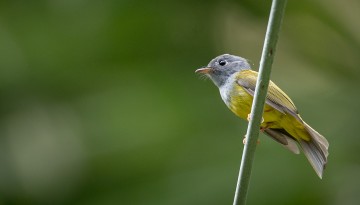
New research finds that territorial behavior and diet help explain why some birds sing more often at dawn, challenging traditional theories about dawn choruses.
Cornell researchers have developed a soft robotic device that gently grips and injects living plant leaves with sensors that help it detect and communicate with its environment. The robot can also inject genetic material into the leaves.
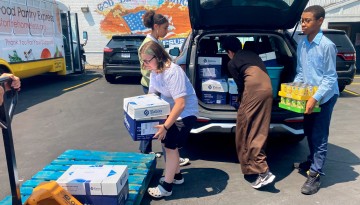
For 10 years, the Youth CAN program has empowered students in Buffalo schools to execute projects that contribute to their communities, while gaining skills and experiences that will help them build careers.
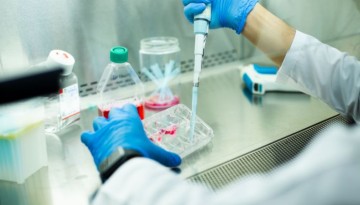
Cornell researchers have discovered a new cell signaling pathway involved in ovulation, a potential target for future research on infertility, contraception and ovarian disease.
The inaugural Award for the Advancement of Science Communication as a Professional Field from the International Network on Public Communication of Science & Technology recognizes outstanding contributions to the development of science communication as a field.
The honor is presented annually, recognizing awardees on campuses across the SUNY system for their commitment to sustaining intellectual vibrancy, advancing the boundaries of knowledge, providing the highest quality of instruction and serving the public good.