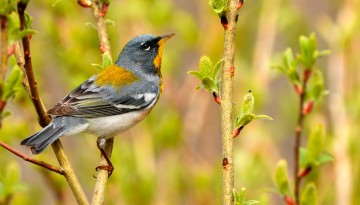
The vast agricultural landscape of the U.S. Midwest known as the Corn Belt acts as a barrier for migrating landbirds, causing them to adjust their flight behaviors similar to when crossing natural barriers like the Gulf of Mexico.
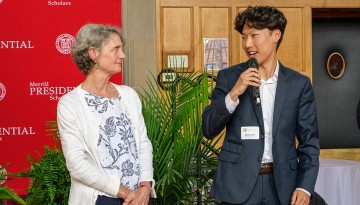
During a May 23 ceremony in Statler Auditorium, more than 25 members of Cornell’s Reserve Officers' Training Corps Tri-Service Brigade were commissioned as second lieutenants or ensigns in the Army, Navy, Marines, Air Force and Space Force.
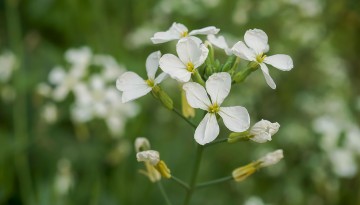
Flowers grow stems, leaves and petals in a perfect pattern again and again. A new Cornell study shows that even in this precise, patterned formation in plants, gene activity inside individual cells is far more chaotic than it appears.
Smolka, a biochemist and former interim director of the Weill Institute for Cell and Molecular Biology, will support life sciences across the university.
Four Cornell researchers were chosen from a competitive, global application pool to receive Bezos Earth Fund awards to use AI to address climate change and nature loss.
In the six weeks leading up to Earth Day, more than 200 Cornell student-athletes, coaches and community members exercised not only to strengthen their bodies, but also to restore corals in the South Pacific.
Researchers have developed tests to assess low-level or chronic inflammation in dairy cattle that they hope will improve animal health and support New York’s food supply.