Cornell Plantations offers a self-guided, mobile phone audio-visual tour and four new interpretive and orientation signs to help visitors learn more about the collections F.R. Newman Arboretum.
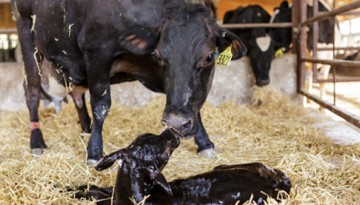
Ice cream, yogurt, cheese and milk all starts with a special delivery – the birth of a calf. Now for the first time, this maternal miracle can be witnessed at the Dairy Cow Birthing Center at the New York State Fair Aug. 22-Sept. 2.
After finding low worker satisfaction in her country, Haitian student Nemdia Daceney continued her research at Cornell this summer hoping to show employers and government officials the human dimension of economic development policies.
Smart Clothing, Smart Girls: Engineering via Apparel Design, a weeklong course, taught 24 middle school girls on campus many principles of science to attract them to STEM fields.
Ponder sustainable fuels and think Rumpelstiltskin: Growers in New York state may one day turn craggy, rugged and lumpy marginal land – by growing grasses and shrubs – into a virtual, perennial fountain of liquid energy gold.
Cornell researcher offers evidence of marine infectious diseases in coral, abalone and oysters, for example, and cases of forecasting and mitigation for those diseases.
Cornell has been awarded a three-year, $1.2 million grant to become one of three new University Centers of Exemplary Mentoring, the Alfred P. Sloan Foundation has announced.
At least half of Canada’s 1.4 billion acre boreal forest, the largest remaining intact wilderness on earth, must be protected to maintain the area’s current wildlife and ecological systems, according to a recent report.