Learn how feathers and DNA are being used to build the next frontier of bird conservation at the 2024 Paul C. Mundinger Distinguished Lectureship given by Dr. Kristen Reugg of Colorado State University and presented by the Cornell Lab of Ornithology.
Cornell researchers have found that in social VR settings, the decision to disclose an invisible disability – a physical, mental or neurological condition that’s not apparent but can limit a person’s movements, senses or activities – is personal.
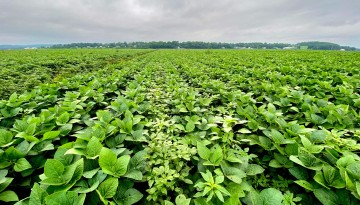
A new partnership between the Borlaug Global Rust Initiative (BGRI) and the European and Mediterranean Cereal Rust Foundation (EMCRF) aims to strengthen global food security by advancing research, promoting knowledge sharing, and developing sustainable management practices to combat rust diseases and powdery mildew in cereal crops.
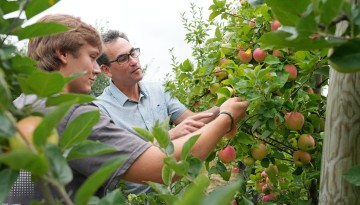
Cornell University Agricultural Experiment Station (Cornell AES) manages nine research farms and 127,000 square feet of greenhouse space on Ithaca’s campus and across New York state. While these facilities are designed to support research, they are also used as unique teaching tools for two dozen courses covering topics in plant science, soil science, entomology, food systems, agricultural machinery, and more.
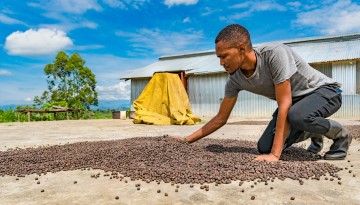
Cornell University and World Coffee Research, backed by funding from USAID, are rolling out a new program focused on improving the resilience and productivity of coffee smallholder growers worldwide.
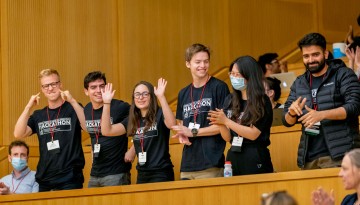
During “Beyond 2024: Envisioning Just Futures and Equitable Democracy,” faculty and students from across the university will come together to creatively showcase research and art, build community and be inspired to imagine a better future.
The Engineers in Action project team has built footbridges connecting thousands in Eswatini to schools, health care and markets - now the group is expanding their impact with two new projects.