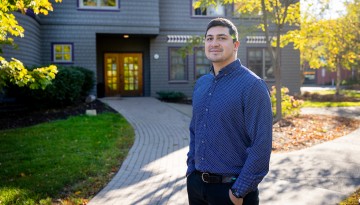
For Michael Charles '16, citizen of the Navajo Nation, his research and advocacy are inseparable – and his lab is generating data to help Indigenous communities advocate for and govern themselves.
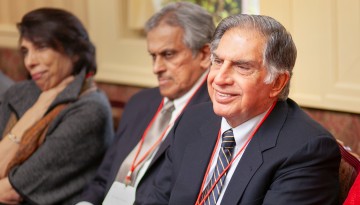
Ratan N. Tata ’59, B. Arch. ’62, one of India’s most influential and respected business leaders and philanthropists, and a former Cornell trustee who became the university’s largest international donor, died Oct. 9. He was 86.
Two grants, up to $25,000 each, will be awarded for research in the life sciences to Cornell faculty who enhance the diversity, equity and inclusion goals of the university.
The College of Agriculture and Life Sciences welcomed 10 new faculty members this fall, advancing the college’s commitment to pursuing purpose-driven science and improving the lives of people across New York state and around the world.
Liquefied natural gas leaves a carbon footprint that is 33% worse than coal, when processing and shipping are taken into account, according to a new Cornell study.
Transitioning to a circular construction economy in New York state could unlock economic activity, create green jobs and advance climate goals, according to a Cornell-led white paper that provides policy recommendations.
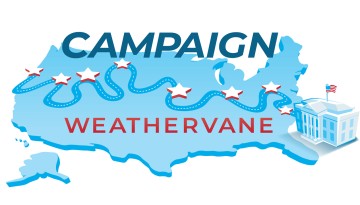
Campaign Weathervane, developed by the Roper Center for Public Opinion Research, invites students and the public to try to navigate the winds of public sentiment in every U.S. presidential race since 1940.
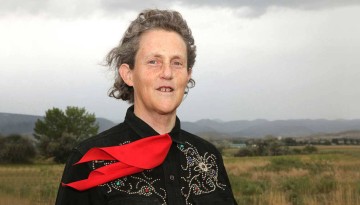
Acclaimed scientist and neurodiversity advocate Temple Grandin will headline an upcoming virtual seminar hosted by the Center for Research on Programmable Plant Systems (CROPPS) on October 8 at 1 p.m. ET.