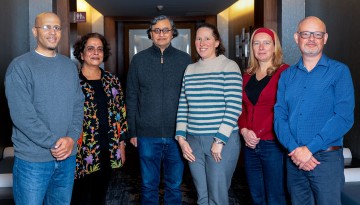
A consortium of 13 research institutions, including Cornell, received a $1.5 million grant from The Andrew W. Mellon Foundation to launch the Ivy+ Mellon Leadership Fellows program this fall.
Louis Hand, professor emeritus of physics, who dedicated more than 40 years to the Cornell community as a professor in the Department of Physics, in the College of Arts and Sciences, died Oct. 30. He was 90.
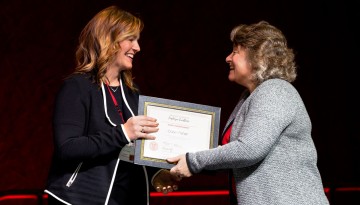
Seventeen individuals and three teams of Cornell employees received President's Awards for Employee Excellence in seven categories, highlighting the achievements of staff and faculty who excel in their roles.
Cornell chemists have developed a technique that allows them to image polymerization catalysis reactions at single-monomer resolution, key in discovering the molecular composition of a synthetic polymer.
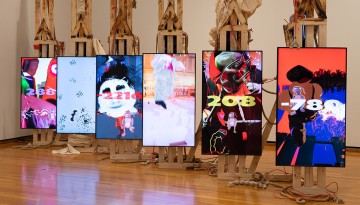
Live events Nov. 16-17 will illuminate questions about performance, photograph and video – and the complex relationship between the three – posed in a current Johnson Museum exhibition.
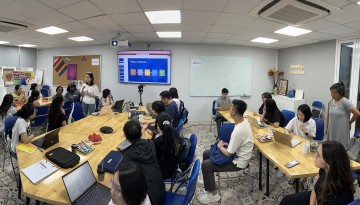
This summer, a team of students from VinUni and Cornell contributed to the Vietnam Adverse Childhood Experience Pathfinder project, which addresses pressing issues for young people in Vietnam.
A Nov. 16 talk sponsored by the Office of the Provost and the College of Arts and Sciences will shed light on the history of hate movements in the U.S.
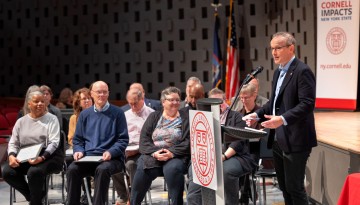
To underscore how local partnerships improve Cornell, Ithaca and Tompkins County, the university presented the 13th annual Cornell Town-Gown Awards to three student-community collaborations.
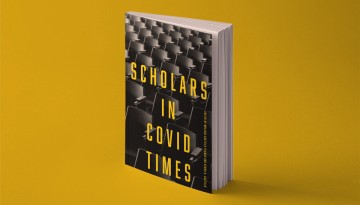
Three years after the disruptions of 2020, teaching and research continue to be immensely different from pre-pandemic times, according to scholar Debra Castillo.