Cornell Tech has announced a total of more than $10 million in gifts and grants from the Simons Foundation and the National Science Foundation, respectively, to support arXiv, a free distribution service and open-access archive for scholarly articles.
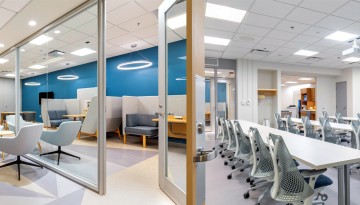
The Cornell Center for Social Sciences has moved into a newly renovated, 2,500-square-foot space on the second floor of Clark Hall, which will serve as a hub for the social sciences on campus.
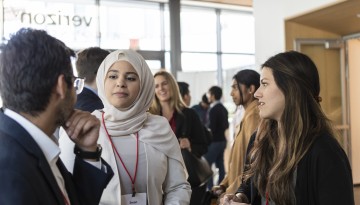
Entrepreneurs will gather to hear fireside chats with top business leaders, enjoy multiple networking and engagement opportunities and hear startup pitches at Entrepreneurship at Cornell’s Eclectic Convergence 2023.
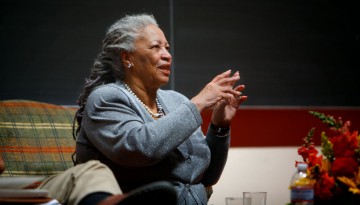
As part of the 30th anniversary celebration of Toni Morrison, M.A. ’55, winning the Nobel Prize in Literature, Cornell will present the author’s “Desdemona” Oct. 27 and 28 at the Schwartz Center for the Performing Arts.
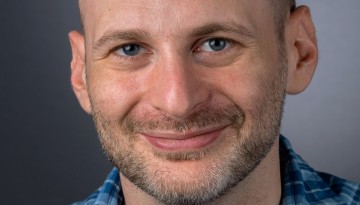
Noah Stephens-Davidowitz, assistant professor of computer science at Cornell Bowers CIS, has been named a Packard Foundation Fellow for his work in theoretical computer science and cryptography.
Researchers using NASA’s James Webb Space Telescope have detected evidence for quartz nanocrystals in the high-altitude clouds of a hot Jupiter exoplanet 1,300 light-years from Earth.