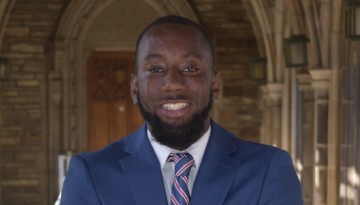
Mar’Quon Frederick will spend the summers of 2022 and 2023 in Washington, D.C., participating in internships, seminars on government and economics, and leadership and professional development workshops.
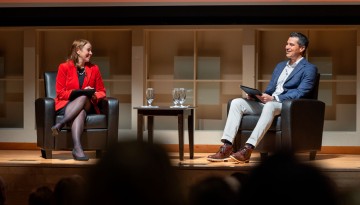
Speaking to trustees, alumni volunteers and university leaders, Dean Colleen Barry described ambitious, public-minded goals for the new Cornell Jeb E. Brooks School of Public Policy at Cornell Leadership Week.
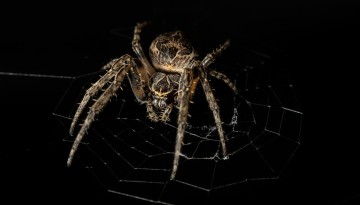
A study of orb weaver spiders finds their massive webs act as auditory arrays that capture sounds, possibly giving spiders advanced warning of incoming prey or predators.
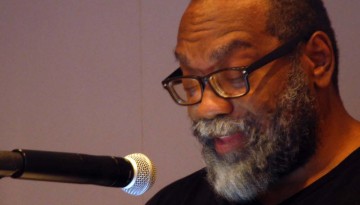
M.H. Abrams Distinguished Visiting Professor, poet and theorist Fred Moten will deliver a lecture on radical Black politics and the poetry of Amiri Baraka.
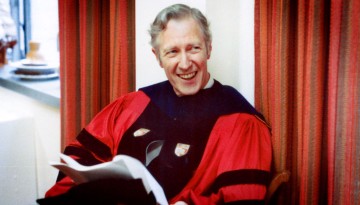
More than two years after the death of Frank H.T. Rhodes – Cornell’s ninth president, beloved for his leadership and eloquence – his family and friends gathered March 26 to celebrate his life.
A Boyce Thompson Institute scientist has developed an app that integrates multiple data analysis features into a single, easy-to-use tool for the metabolomics community.
Bruno Shirley won Cornell’s Three Minute Thesis (3MT) competition. 3MT challenges graduate students to present their thesis research compellingly to general audiences in just three minutes.
A book by Liliana Colanzi, assistant professor of Romance studies, has won the Ribera del Duero prize, honoring the best short stories in Latin America and Spain.
Despite persistent gaps in workforce participation, when it comes to wanting to work, the gender gap has all but disappeared over the last 45 years, according to Cornell sociologist Landon Schnabel.