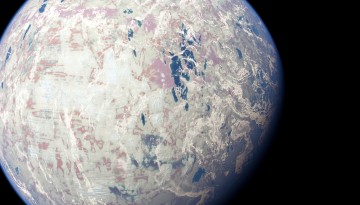
As ground-based and space telescopes improve, astronomers need a color-coded guide to compare Earth’s biological microbes to cold, distant exoplanets to grasp their composition.
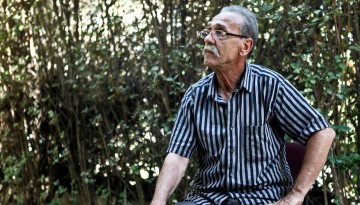
On March 22, co-founder and former leader of the Israeli Black Panthers will give a talk, "Darkness in the Holy Land: The Israeli Black Panthers’ Struggle for Human Rights and Against Racism."
Richard Nally will spend his three-year Klarman fellowship seeking to understand the mathematical structures at the root of gravity and quantum mechanics.
The lecture series will link the economic relationship between the northern and southern United States, following 'plantation goods,' in three talks by Seth Rockman, associate professor of history at Brown University.
Faces transmit social information about goals and motivations that can help learners overcome the inherent difficulty of sharing a teacher's visual perspective, new Cornell psychology research finds.
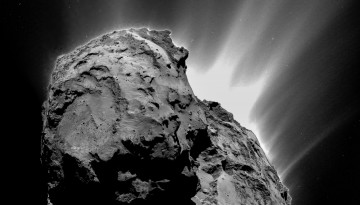
After a European spacecraft rendezvoused with Comet 67P about seven years ago, astronomers now have found a cosmic revelation: It emits molecular oxygen drawn from its nucleus.
Cornell physicist’s discovery could lead to the engineering of high-temp superconducting properties into materials useful for quantum computing, medical imaging.
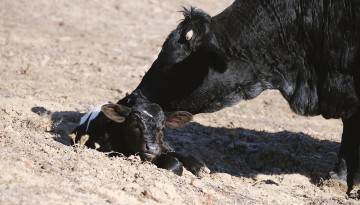
Globally, by the end of this century low-income cattle farmers in poor countries may face financial loss between $15 to $40 billion annually, due to looming climate change.
A $10 million gift from an alumni donor will grow the roster of faculty, students and equipment needed to study the mysterious behavior of matter at atomic and subatomic scales, strengthening the university’s position as a leader in quantum science and technology.