In a new book, Joseph Margulies ’82 proposes tools including neighborhood trusts to empower low-income residents to fight the threat of gentrification.
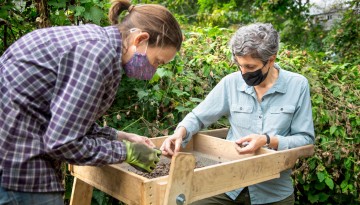
Cornell researchers and students are collaborating with community members to shed light on the role St. James A.M.E. Zion Church played in the abolitionist movement of the 1800s.
Cornell’s Winter Session has always been a great way for students to earn credits, but many may not realize that some popular courses, often closed out during the spring and fall semesters, are also available during the winter…
Research from a team of Cornell and Ithaca College faculty and students provided key insights to Tompkins County legislators, who recently approved funding for a new housing program to help formerly incarcerated people.
The Laidlaw scholars at Cornell are diving into a world of research. Over the first summer of the program, 24 Cornellians selected for the prestigious international program completed research projects on topics ranging from migration and big data to entomology, engineering communications and animal science.
The inaugural 200,000 Euro awarded was awarded to Ginsparg for his work in developing the first platform to make scientific preprints immediately available globally.
New Cornell research uses mathematical modeling to show that friendship networks can distort a voter’s sense of an election’s outcome, resulting in the victory of politicians who do not represent the preferences of the electorate as a whole.
Garrett Emmons '23 and Hannah Master '23 have each been awarded a Harry Caplan Travel Fellowship worth $5,000 to study and conduct research in Italy and Israel, respectively.
Composer Roberto Sierra won the 2021 Latin Grammy Award for the Best Classical Contemporary Composition with “Music From Cuba And Spain, Sierra: Sonata Para Guitarra.”