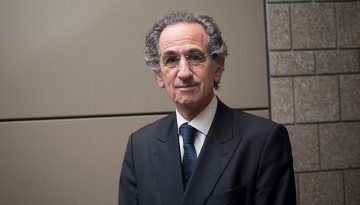
Former Ohio Gov. John Kasich decried the negativity of current politics and urged people across the political spectrum to work together to find solutions during a conversation Feb. 17.
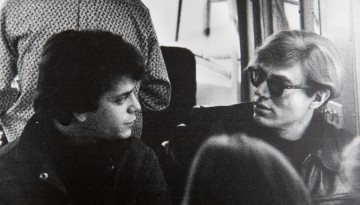
Judith Peraino, professor of music, won a grant from the National Endowment for the Humanities to research artist Andy Warhol’s influence on pop and rock musicians in the 1970s, including David Bowie and Lou Reed.
Millions of people around the world hushed on Feb. 18 to hear NASA engineer Swati Mohan ’04 calmly call the play-by-play of Perseverance rover landing on Mars.
Molly O’Toole ’09, an immigration and security reporter with the Los Angeles Times, has been named the Zubrow Distinguished Visiting Journalist Fellow in the College of Arts and Sciences.
Historian Josef Konvitz ’67 will explore and compare trends in tolerance in France and the United States in a digital talk on March 15, focusing on questions of interfaith relations and public leadership that transcend national borders.
While people from all groups reduced their social interactions, those with higher incomes made greater changes to their behavior, according to a new study co-authored by a Cornell researcher.
Four early-career faculty members have won 2021 Sloan Research Fellowships from the Alfred P. Sloan Foundation, which support research and education related to science, technology, mathematics and economics.
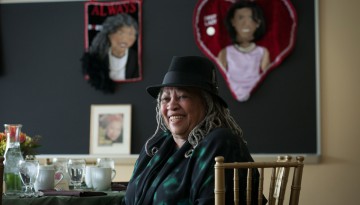
Celebrating the author’s work and the community-building tradition of African American quilt-making, the Toni Morrison Quilting Project kicks off on Feb. 22, noon to 1:30 p.m., with a virtual quilting traditions workshop, featuring Ithaca-based fiber artist Heather Stewart.
John R. Kasich, governor of Ohio from 2011 to 2019, will share insights about the future of the Republican party in a virtual event with the Cornell community on Feb. 17.