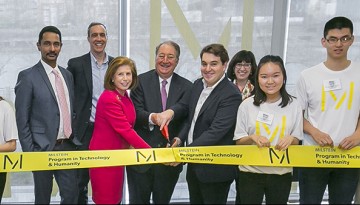
The Milstein Program in Technology and Humanity, which offers selected undergraduates in the College of Arts and Sciences a specialized curriculum to prepare them as leaders in an increasingly digital world, was celebrated April 12 at a ribbon-cutting at Cornell Tech.
Dr. Leonard Schleifer ’73, the 2019 Cornell Entrepreneur of the Year, shared the successes and failures he experienced while growing his biotechnology company, Regeneron, during an April 11 conversation with Lance Collins, the Joseph Silbert Dean of Engineering.
By examining data from the Cassini spacecraft’s last close encounter with Saturn’s moon Titan, scientists have found that its methane-filled lakes are up to 300 feet deep.
Events include “The Spring Quartet” jazz concert, the Centrally Isolated Film Festival, an homage to the Caffe Cino at the Schwartz Center’s Black Box Theatre, three Ithaca premieres from Cornell Cinema and a reading from award-winning poet Claudia Rankine.
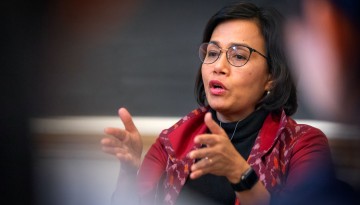
Sri Mulyani Indrawati, Indonesia’s minister of finance, delivered this year’s Bartels World Affairs Lecture April 10. The event was hosted by the Mario Einaudi Center for International Studies and the Southeast Asia Program.
Filiz Garip, a former engineer whose career has been defined by interdisciplinary thinking, has been named director of a Cornell incubator for new ideas and research in economic sociology.
A Cornell researcher, who is a leader in developing a new type of gene editing CRISPR system, and colleagues have used the new method for the first time in human cells – a major advance in the field.
On April 21 and 24 Cornell classics students will stage the ancient Seneca play “Troades” in the original Latin, demonstrating the power of Seneca’s language and the vigor of Cornell’s living Latin program.