Five faculty fellows involved in the China’s Cities collaborative project reported on their results from three years of research at a March 22 capstone lecture. The Institute for the Social Sciences sponsored the project.
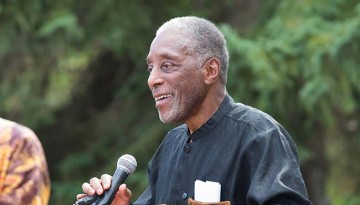
The Africana Studies and Research Center kicks off a year-long commemoration of the 50th anniversary of its founding with a two-day symposium honoring its founder, James Turner.
Cornell astronomers say that life already has survived the kind of fierce radiation found on such faraway planets as Proxima-B, 4.24 light years from Earth, and they have proof: you.
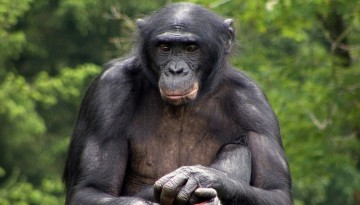
Cornell philosopher Laurent Dubreuil and primatologist Sue Savage-Rumbaugh explore the theoretical and practical dimensions of being human in their 2018 book, “Dialogues on the Human Ape.”
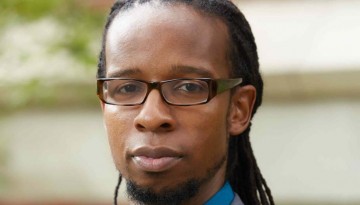
Ibram X. Kendi, professor of history at American University and National Book Award-winning author for his 2016 “Stamped From the Beginning,” will give the American Studies Program’s Krieger Lecture April 15.
Kesten is widely considered one of the most prolific and influential practitioners of probability theory, influencing engineering, computer science, ecology, economics and other fields.
Events include two Carl Becker Lecture Series talks by historian and author Michael Kazin; a lecture by wildlife conservationist and A.D. White Professor-At-Large Laurie Marker; Cornell Cinema’s screening of “Dragnet Girl,” accompanied live by the electronic group Coupler; and Swiss artist Elisabeth Masé in a conversation at the Johnson Museum.
Cameras in nursing home bedrooms aim to protect the elderly, but according to new Cornell-led research they also raise tensions around issues of privacy, safety and dignity – and may even endanger the people they’re supposed to help.
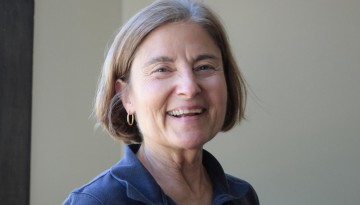
The inaugural event in the Kenneth A.R. Kennedy Lecture in Human Evolution series will be April 9 and will feature Cynthia Beall, professor of anthropology at Case Western Reserve University.