Eight faculty members have received Stephen H. Weiss Awards for excellence in their teaching of undergraduate students and contributions to undergraduate education.
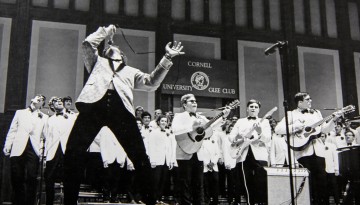
After a half-century singing songs you know, the Cornell Hangovers offer a harmonic convergence to celebrate their golden anniversary. The group’s Fall Tonic concert will be Nov. 10 at 8 p.m. at Bailey Hall.
Cross-campus gathering will focus on the biggest challenges facing the world, and help determine a theme on which the university will focus in the 2019-2020 academic year.
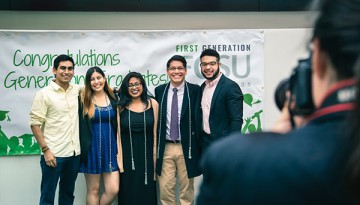
Cornell's commitment to accessibility means new and increased efforts to support first-generation students. Throughout Cornell’s history, many of its students have been the first generation in their families to earn a baccalaureate degree.
Faculty profiles: Jawad Addoum, Dyson School of Applied Economics and Management; Julia Chang, Department of Romance Studies; Matt D'Amore, Cornell Law School; and Karen Levy, Information Science and Cornell Law School.